
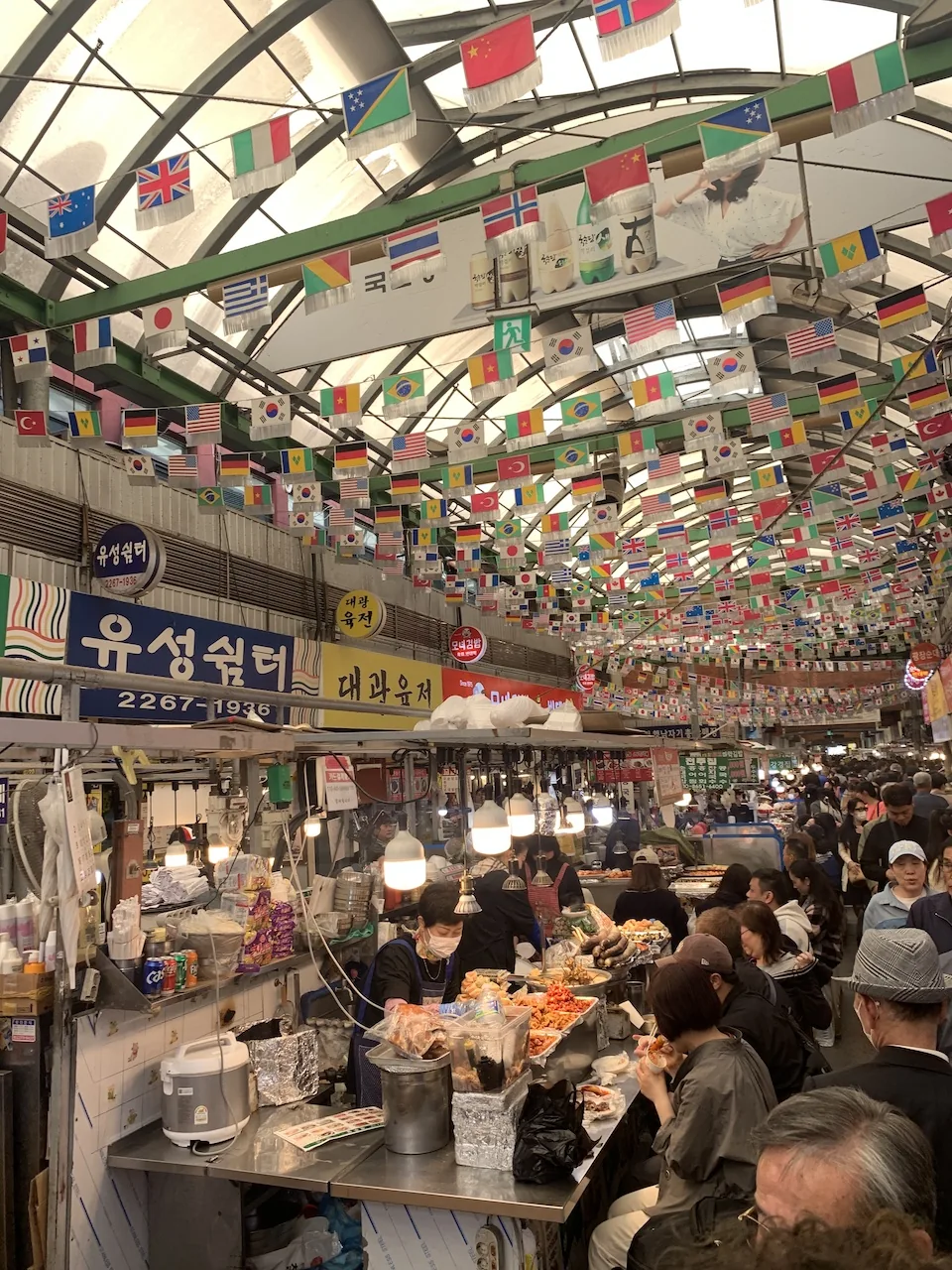
Stepping out of Exit 8 of Jongno 5-ga Station on Seoul Subway Line 1, the irresistible aroma of sizzling griddles and the lively chatter of locals and travelers fill the air. Welcome to Gwangjang Market (광장시장), Korea's first permanent traditional market established in 1905, boasting over 120 years of living culinary history.
Unlike ordinary tourist areas, Gwangjang Market offers an electrifying sensory adventure where grandmothers hand-grind mung beans on ancient stone mills, master chefs slice handmade noodles on wooden boards, and friends huddle around steaming pots with chilled bowls of makgeolli (Korean rice wine). Here is your insider guide to navigating and tasting the very best street food classics.
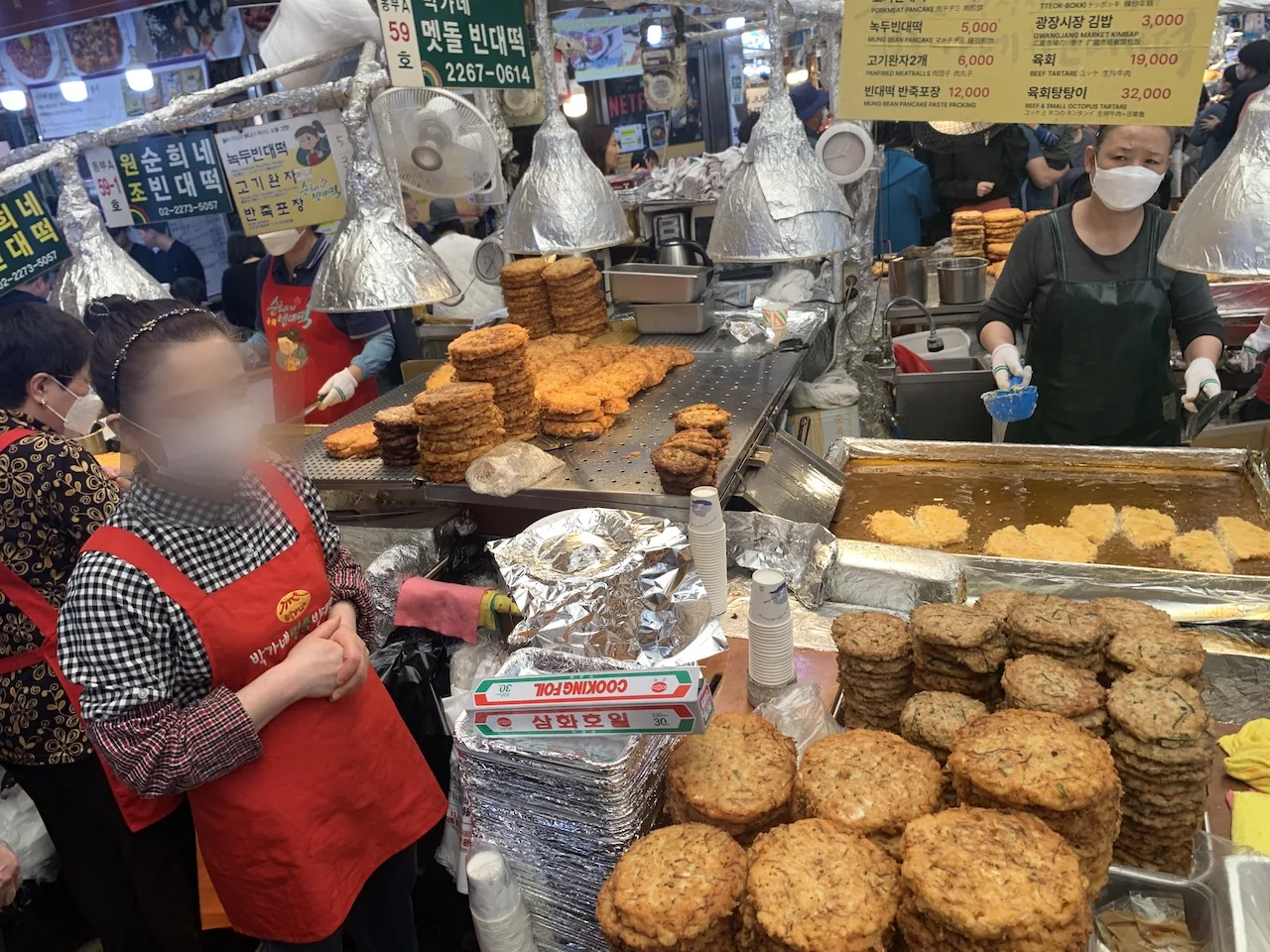
The Golden Crisp of Mung Bean Bindaetteok and Savory Pork Patties
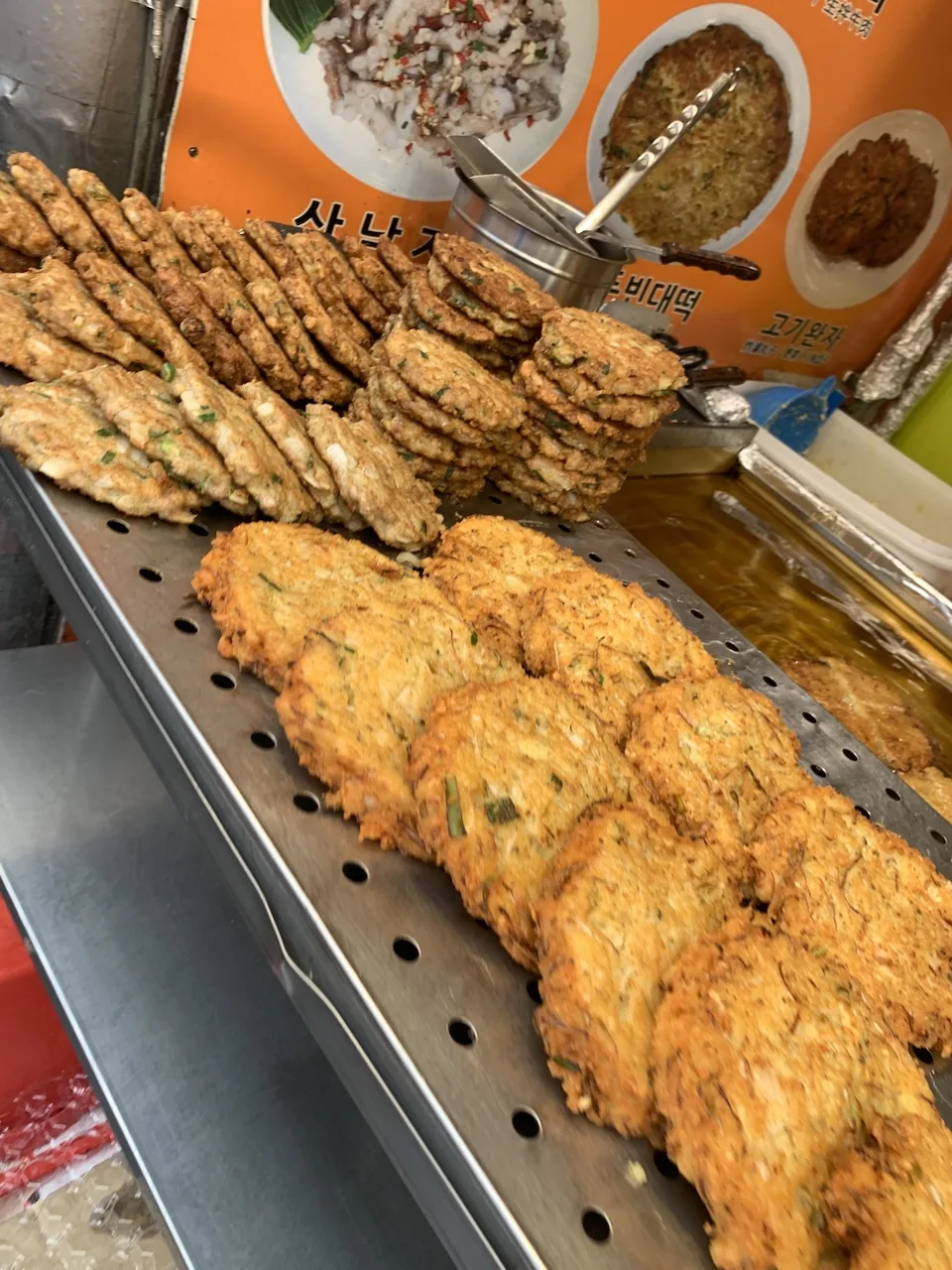
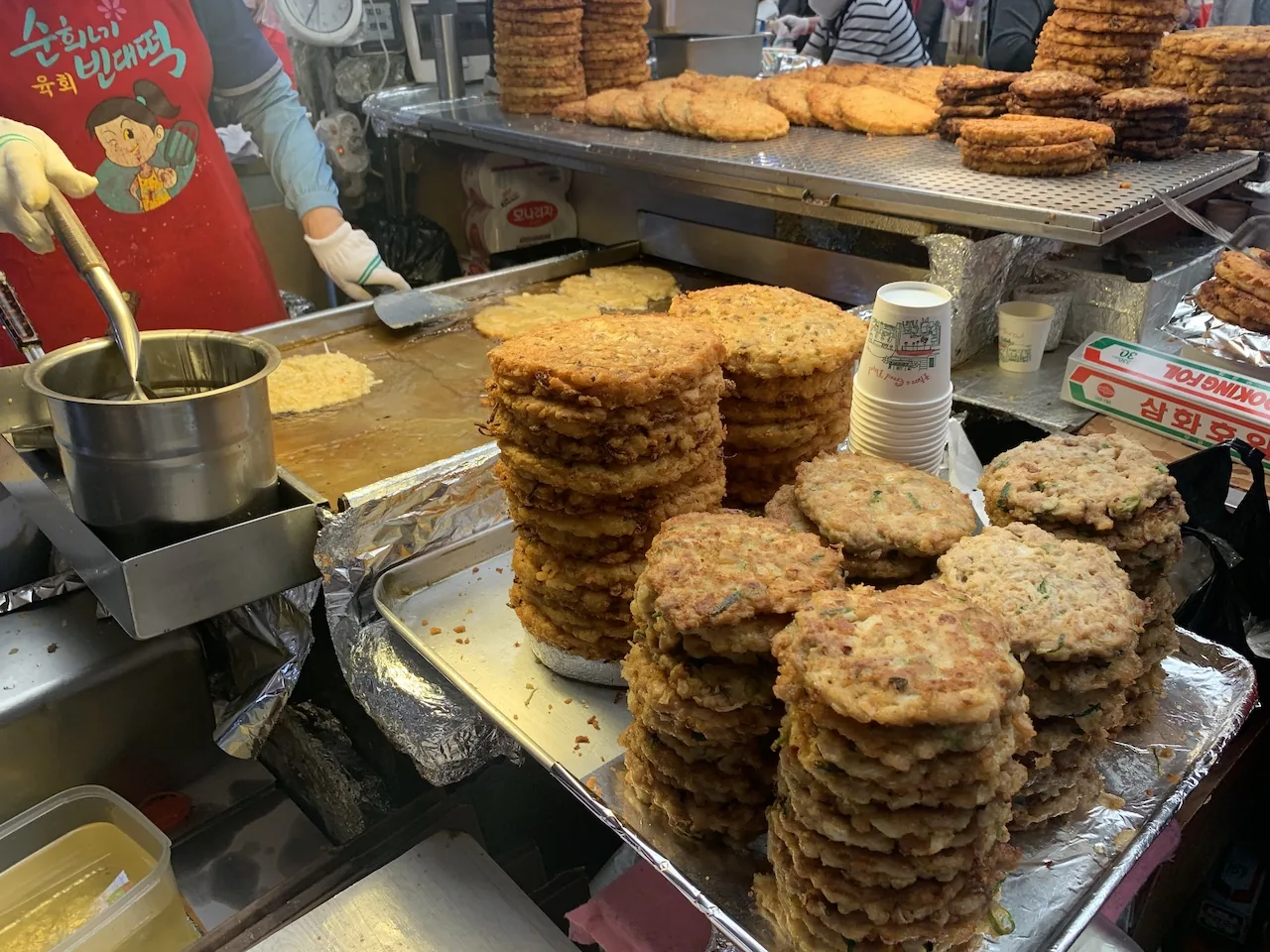
The beating heart of Gwangjang Market is its central crossroad, where gigantic cast-iron griddles fry Bindaetteok (빈대떡) in generous pools of hot oil. Made from freshly ground mung beans mixed with crunchy bean sprouts and scallions, these thick savory pancakes are fried to a golden, crunchy exterior while remaining steaming and tender inside.
At just 5,000 KRW ($3.70 USD) per pancake, pairing it with savory pork meatballs (Wanja, 3,000 KRW) makes an unbeatable meal. The secret is dipping each piping hot bite into sliced raw onions steeped in light soy vinegar, cutting through any oiliness with a refreshing punch.
Netflix Famous Hand-Cut Noodles and Cozy Market Dumpling Stalls
Wandering deeper into the covered market brings you to the noodle alley featured on Netflix's Street Food: Asia. Watching the chef rhythmically slice hand-kneaded dough on thick wooden blocks before dropping it into rich anchovy broth is mesmerizing. A bowl of knife-cut noodles (Kal-guksu) paired with handmade pork and kimchi dumplings (Mandu) provides ultimate comfort on a chilly afternoon.
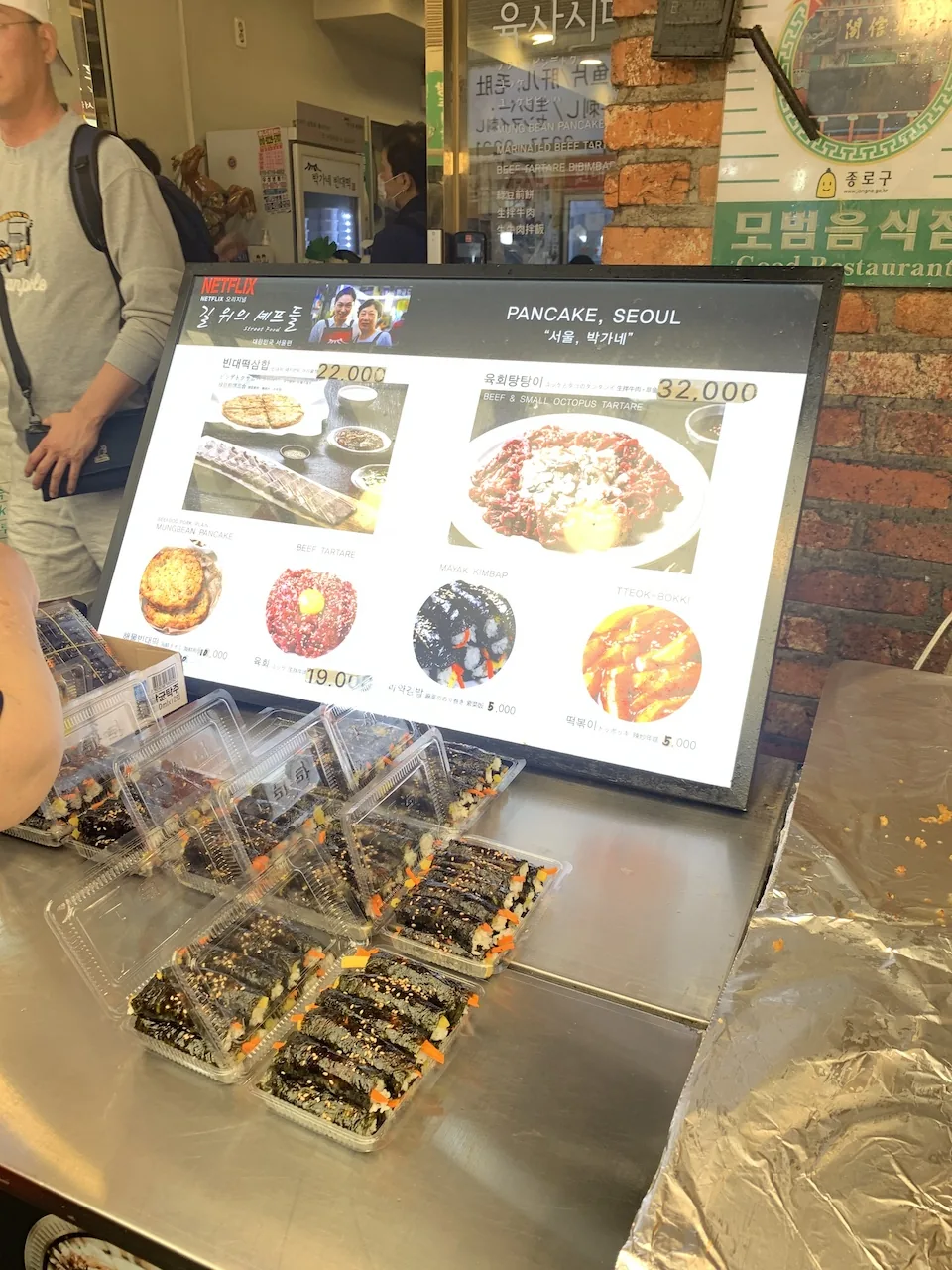
Addictive Mayak Gimbap and Steaming Giant Blood Sausage
Another legendary staple is Mayak Gimbap (마약김밥), nicknamed "narcotic gimbap" because its addictive taste keeps you coming back for more. Filled simply with yellow pickled radish, spinach, and carrots, these bite-sized seaweed rolls are brushed with fragrant toasted sesame oil and dipped into a zesty hot mustard sauce.
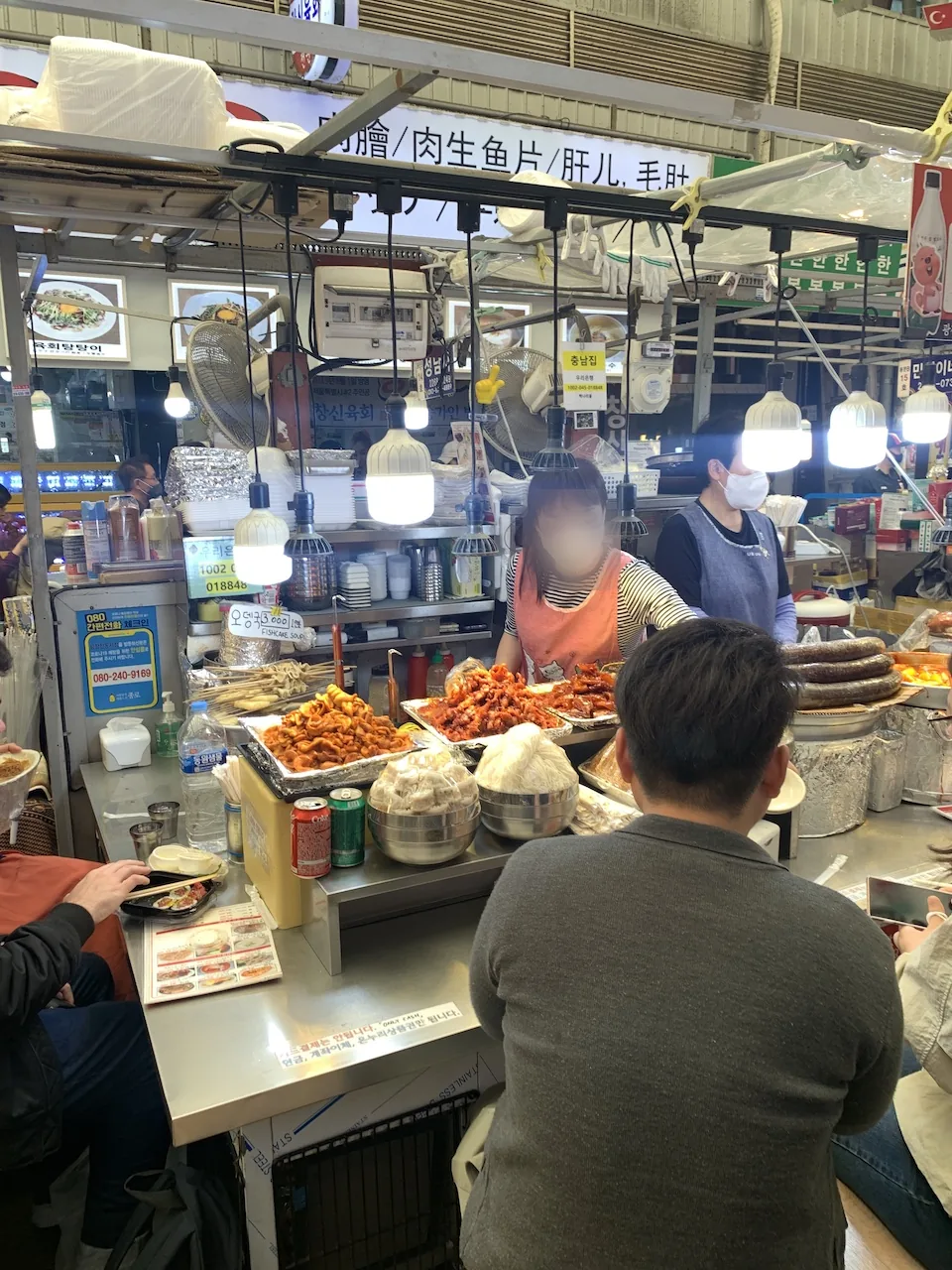
Right beside the gimbap stalls, colossal steamed blood sausages (Wang Sundae) stuffed with glutinous rice and glass noodles steam in stacked heaps. Sliced thick and served with tender pork cuts, it delivers a hearty traditional flavor deeply cherished by generations of Seoulites.
Michelin Bib Gourmand Beef Tartare and Mountainous Spicy Cod Stew
Tucked in the east alley lies "Yukhoe Alley", home to Michelin Bib Gourmand restaurants like Buchon Yukhoe. Fresh ruby-red Korean beef tartare is served seasoned with sesame oil and black pepper, topped with sweet Asian pear slices and a raw egg yolk. When mixed together, it creates an exquisite melt-in-your-mouth richness.
To conclude your feast, head to Eunseong Hoetjip for their famed Spicy Cod Stew (Daegu Maeuntang). Piled high with tender codfish, soft milt, flavorful roe, and watercress, the bubbling broth is refreshingly spicy and deeply savory thanks to a generous handful of sweet freshwater shrimp.
Essential Traveler Tips, Subway Access, and Market Hours
Gwangjang Market is best reached via Seoul Subway Line 1 at Jongno 5-ga Station (Exit 8), taking just 1 minute on foot. You can also arrive from Euljiro 4-ga Station (Lines 2 & 5, Exit 4) with a pleasant 5-minute walk across the Cheonggyecheon stream bridge.
📍 Seoul Gwangjang Market (Food Alley)
88 Changgyeonggung-ro, Jongno-gu, Seoul (Subway Line 1, Jongno 5-ga Station, Exit 8)
Food stalls operate every day from 09:00 to 23:00. While cash was once king, virtually all stalls now accept domestic/international credit cards and mobile payments. For the best experience without intense crowds, aim for weekdays between 14:00 and 16:30.