Amid the towering modern glass skyscrapers of central Seoul, the most poetic and tranquil sanctuary for travelers is without question the Deoksugung Stonewall Walkway (Deoksugung Doldam-gil). Stepping beside the historic Daehanmun Gate, metropolitan clamor recedes behind warm earthenware bricks and curving tile-capped masonry, bestowing an immediate sense of unhurried peace.
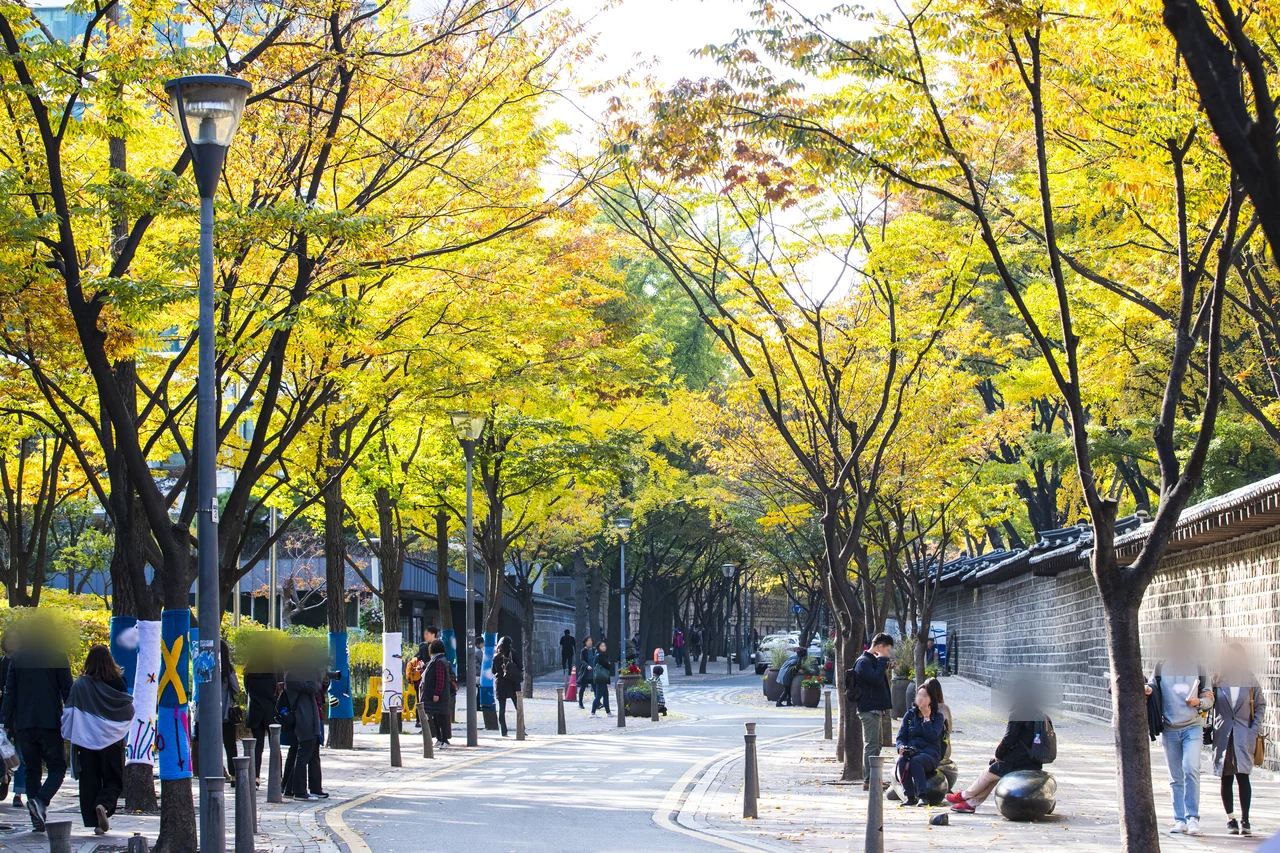
Dispelling the lighthearted old urban myth that couples who stroll here will part, today's stone path is celebrated as Seoul's premier walking route for couples and solitary dreamers alike. During crisp autumn afternoons, golden ginkgo foliage and red maples arch overhead, cascading leaves over dark gray roof tiles like a living painting.
Strolling Along Seoul's Most Romantic Curved Stonewall Walkway
The distinctive charm of the stonewall path lies in its gentle, organic curves following the natural contours of the historic neighborhood. Leading onward toward the Jeongdong Theater and Seoul Museum of Art, broad canopies shade pedestrian benches, creating ideal pauses for warm takeaway coffee while listening to the crunch of dried leaves underfoot.
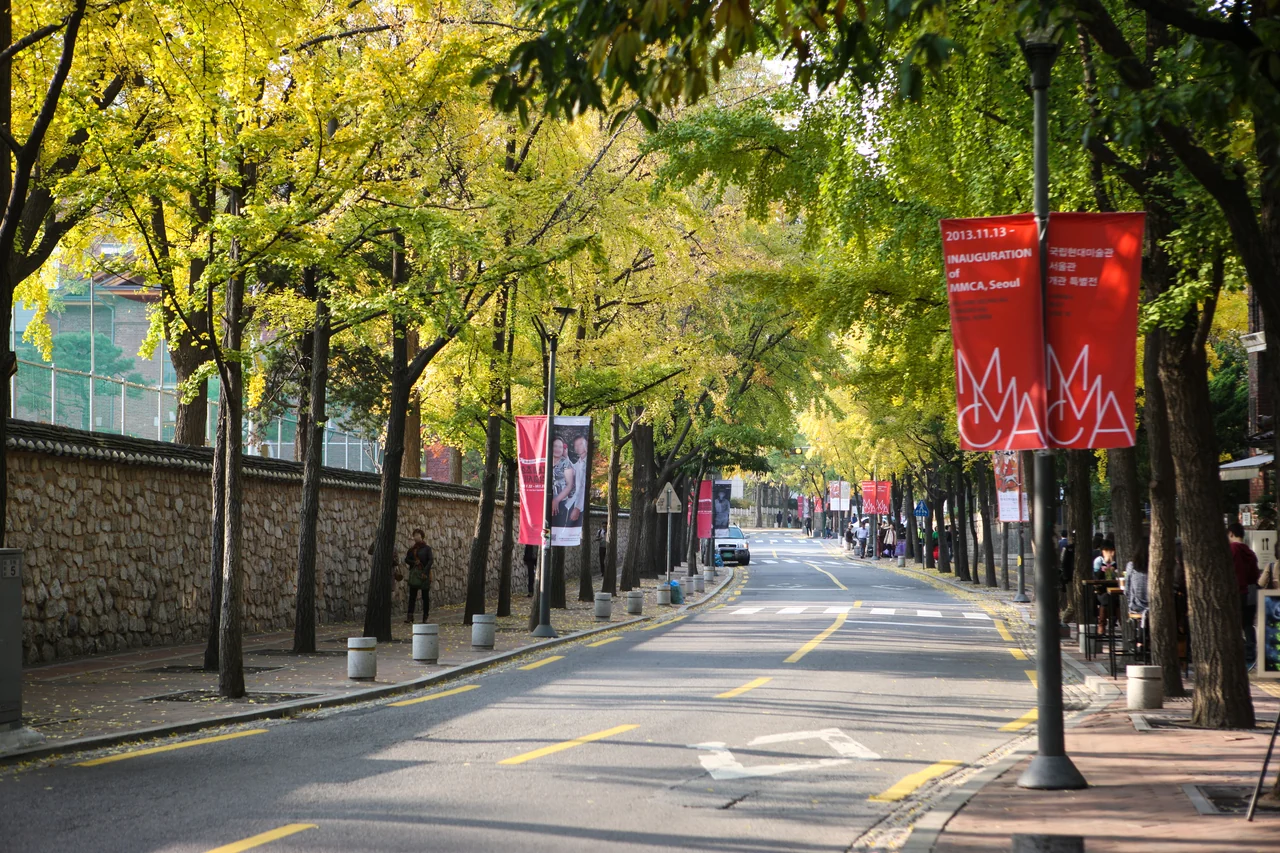
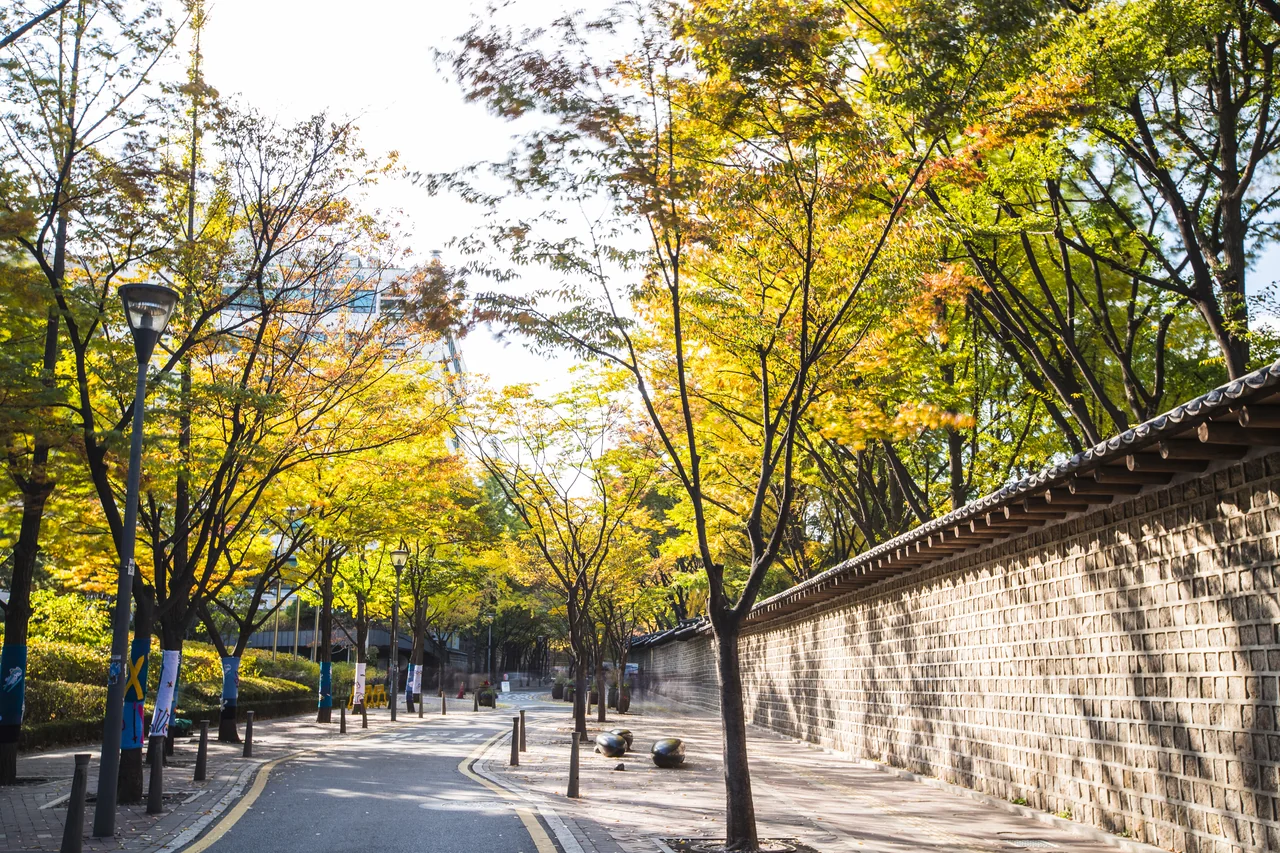
Wandering into Jeongdong reveals an extraordinary architectural tapestry from the dawn of Korea's modernization. The red-brick Jeongdong First Methodist Church, historic Jungmyeongjeon Hall, and the old Russian Legation watchtower harmonize effortlessly with the ancient palatial masonry.
The Fully Connected 1.1-Kilometer Perimeter Path Behind the British Embassy
For decades, a rear section of the palace wall remained closed off where it abutted the British Embassy compound. With the diplomatic boundary restored and newly opened to the public, visitors can now walk a seamless, uninterrupted 1.1-kilometer perimeter loop encircling the entire palace grounds.
This newly unveiled stretch features comfortable wooden boardwalks and shaded paths winding beneath old trees, allowing strollers to peer through open balustrades into the secluded inner woods of Deoksugung.
Neoclassical Western Architecture and Fountain Gardens at Seokjojeon Hall
Entering the palace through Daehanmun Gate reveals a scene found nowhere else among Seoul's royal palaces. Beyond traditional wooden halls stands Seokjojeon Hall, a monumental stone edifice fashioned from pure white granite.
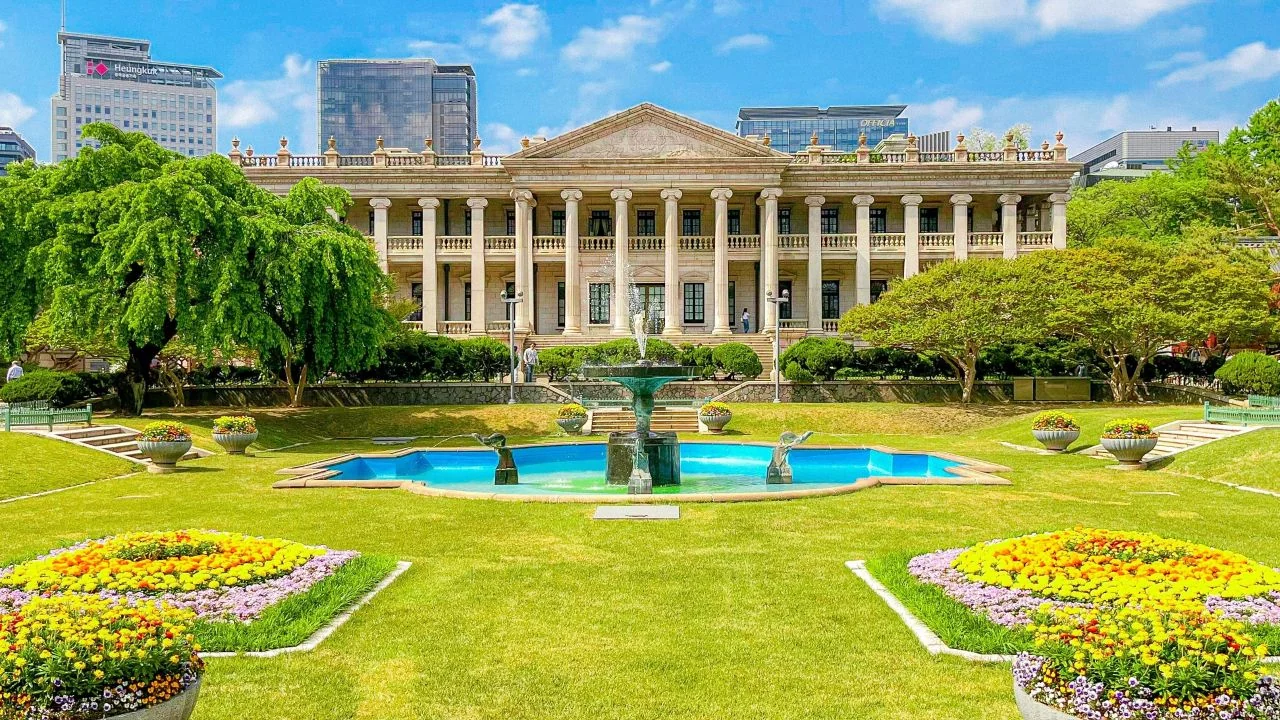
Completed in 1910 under Emperor Gojong as a symbol of the Korean Empire's modern aspirations, this three-story palace features stately Ionic columns and classical pediments. Before it stretches a Western-style geometric garden centered on an ornate bronze fountain, where blooming crape myrtle blossoms add brilliant splashes of magenta from midsummer through autumn.
Imperial Dignity and Modern Heritage Across the Grounds of Junghwajeon Hall
Beside Seokjojeon stands Junghwajeon Hall, the imperial throne hall of the Korean Empire. Rising upon a two-tiered stone terrace, its soaring ceiling shelters twin golden dragons sculpted in relief, reflecting Emperor Gojong's bold proclamation of national sovereignty.
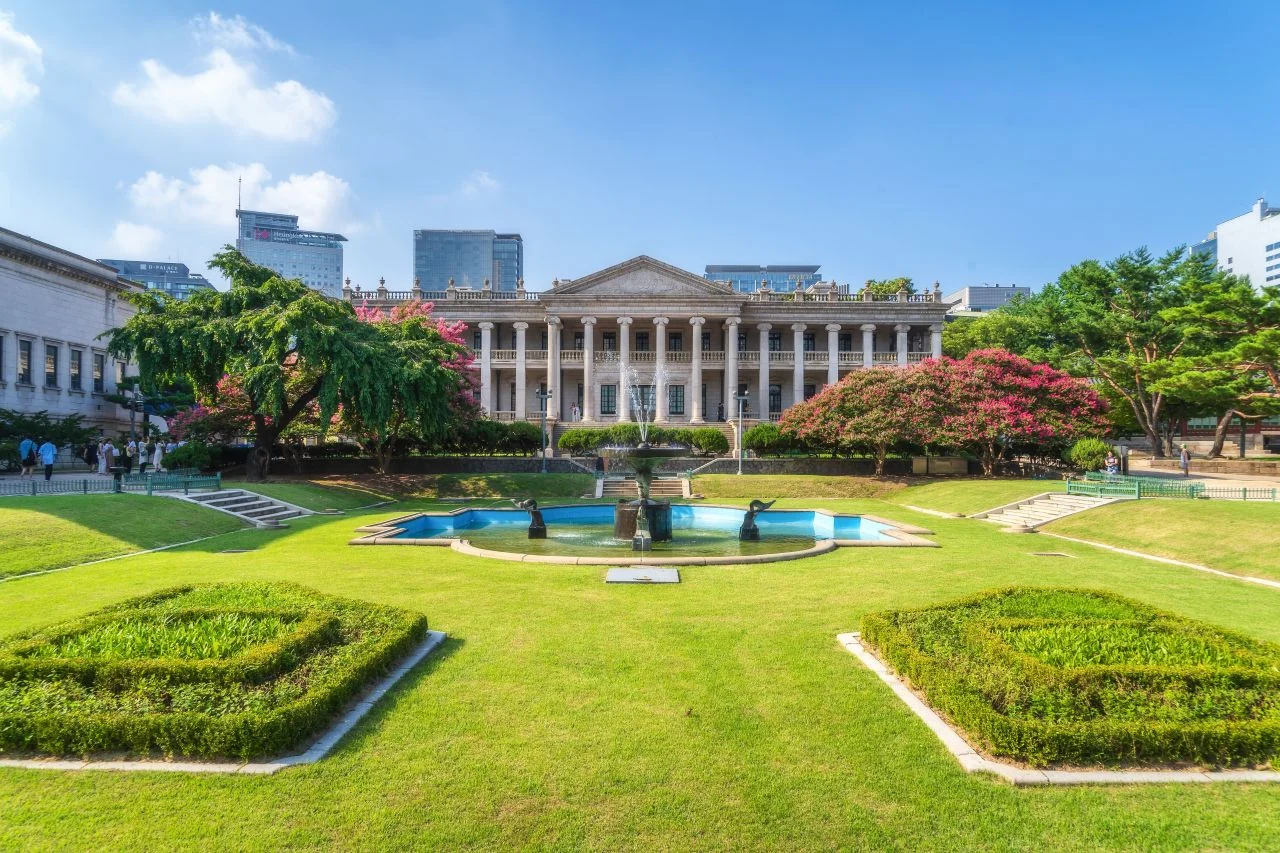
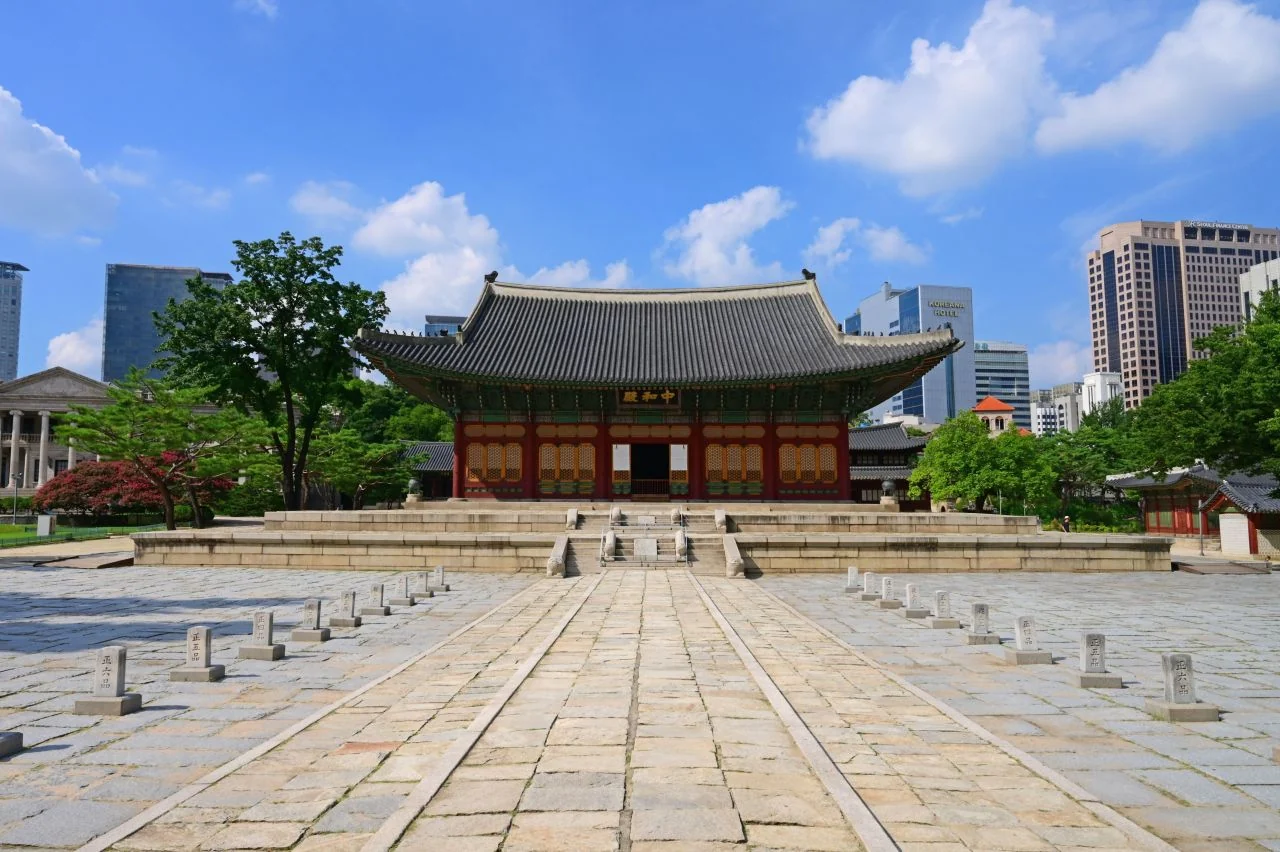
Unlike other royal sites requiring special seasonal reservations, Deoksugung remains open every evening until 21:00. As dusk falls and golden spotlights illuminate the painted eaves of Junghwajeon and the glowing fountain waters, the dialogue between historic majesty and the surrounding glass towers creates an enchanting nocturnal spectacle.
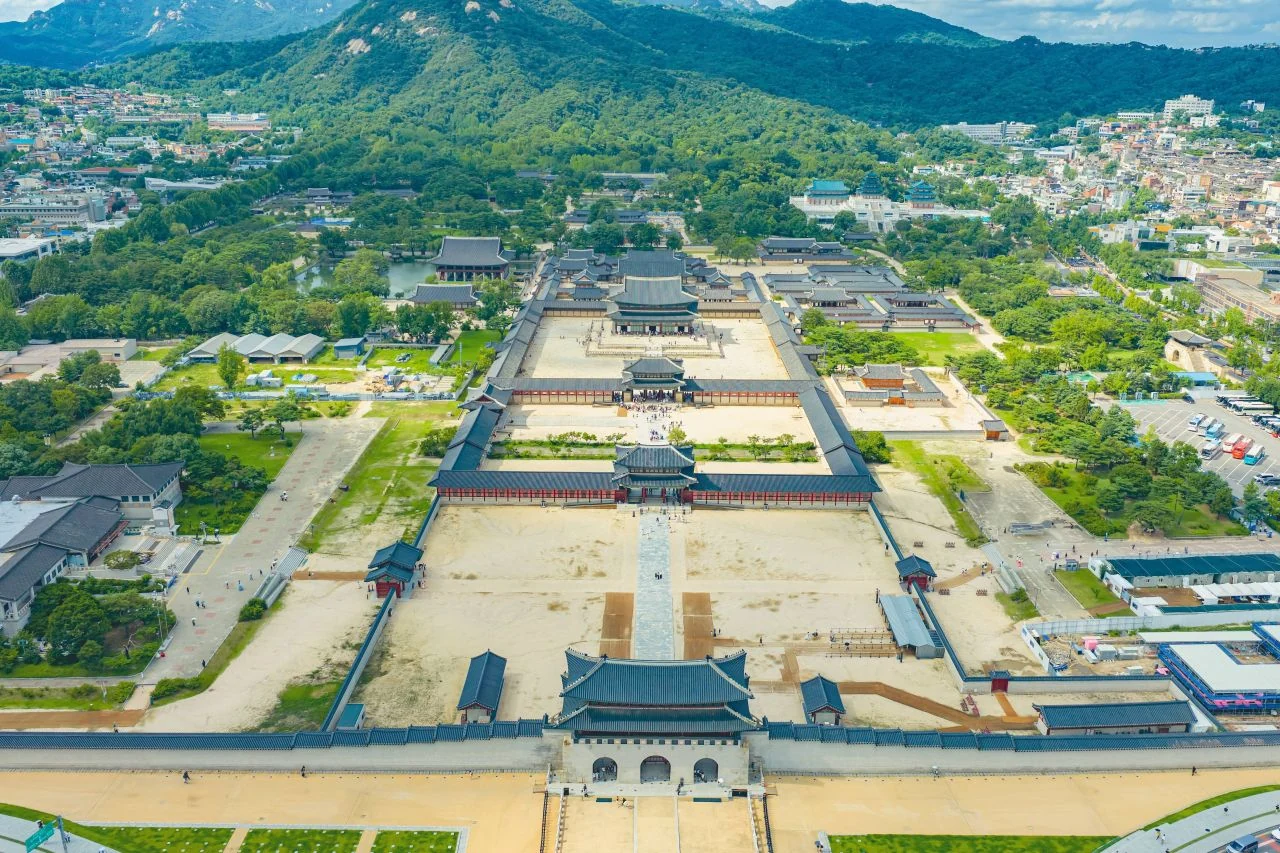
Travelers can easily combine this romantic outing by heading north toward the grand royal court of Gyeongbokgung Geunjeongjeon or wandering through the serene wooded gardens of Changdeokgung Secret Garden for a comprehensive royal walking tour of Seoul.
Visitor Information, Evening Openings and Jeongdong Walking Tips
Essential guidance on entry tickets, operating hours, evening illumination, and the guard changing schedule at Deoksugung Palace.
| Category | Admission Fee | Details & Discounts |
|---|---|---|
| Adults (Ages 25–64) | 1,000 KRW | Palace grounds entry (Stonewall path is free) |
| Youth & Children (Ages 24 & under) | Free | Valid photo ID or passport required |
| Seniors (Ages 65 & over) | Free | Valid government ID required |
| Hanbok Wearers | Free | Standard traditional or modern Korean hanbok |
| Culture Day (Last Wednesday of month) | Free | Complimentary admission for all visitors |
- Address: 99 Sejong-daero, Jung-gu, Seoul (Deoksugung Palace)
- Hours: 09:00–21:00 (Last entry 20:00; closed Mondays / Outer stonewall path open 24 hours daily)
- Royal Guard Changing Ceremony: 11:00 & 14:00 (Twice daily in front of Daehanmun Gate; closed Mondays)
- Suggested Route: City Hall Station ➔ Daehanmun ➔ Stonewall Path ➔ Jeongdong First Church ➔ Seoul Museum of Art ➔ Palace Interior (approx. 2 hours)
- Parking: Public transit strongly recommended (Subway lines 1 & 2, City Hall Station, exits 1, 2, or 12)