In the vibrant historic heart of central Seoul, nowhere embodies the enduring majesty and refined architectural elegance of the Joseon Dynasty more completely than Geunjeongjeon Hall at Gyeongbokgung Palace. Established by King Taejo as the primary throne hall of the royal realm, this monumental timber structure framed against the granite crests of Mount Bugaksan inspires immediate awe and admiration.
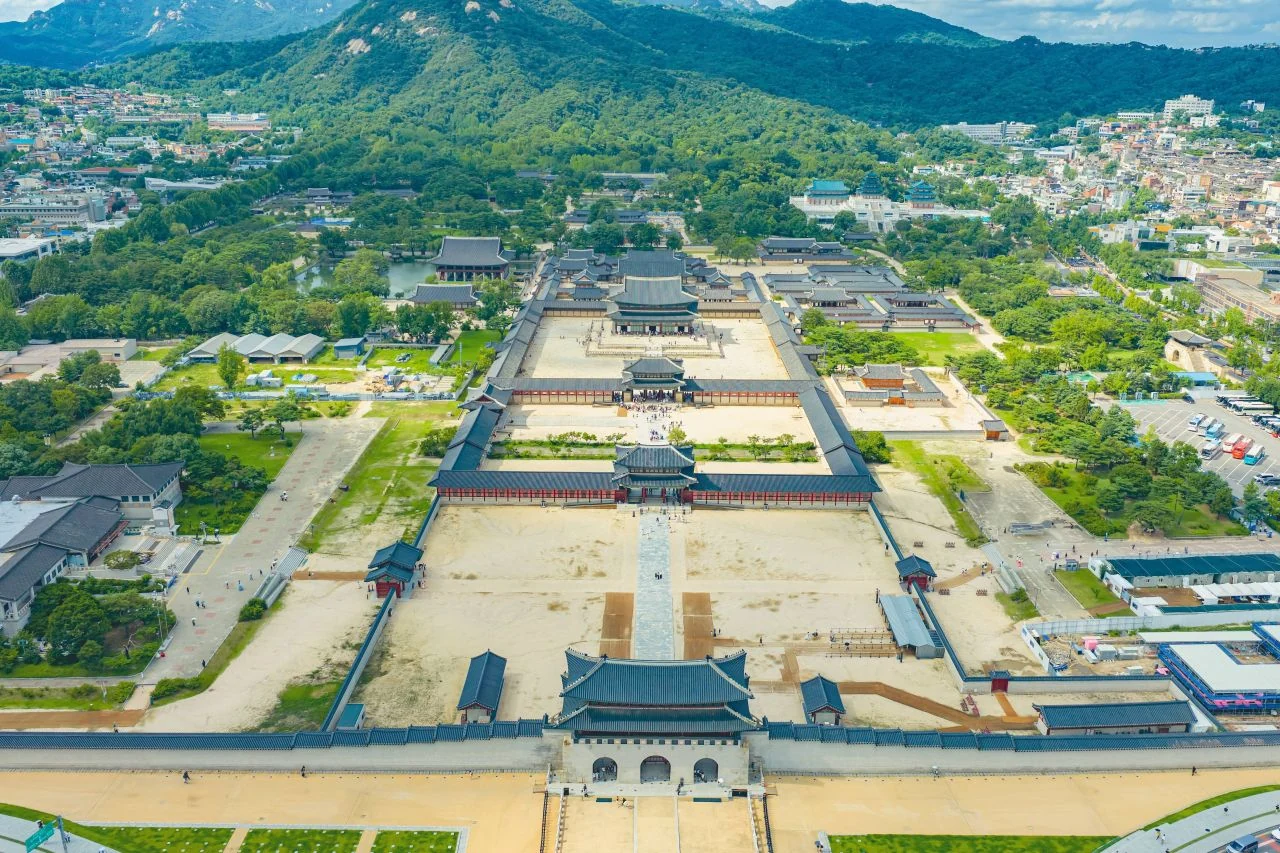
Translated poetically as the 'Hall of Diligent Governance', Geunjeongjeon served as the grand stage for coronation ceremonies, high-level diplomatic audiences, and morning imperial assemblies. The spatial progression leading through successive monumental gates into the vast courtyard demonstrates the measured restraint and royal dignity of traditional Korean court architecture.
Crossing the Restored Gwanghwamun Woldae Along the Royal Palace Axis
The journey through Gyeongbokgung begins at the newly reconstructed Gwanghwamun Woldae, an elevated stone terrace extending gracefully before the palace's primary southern gate. Historically functioning as an open public stage where the Joseon monarch communicated with his subjects, stepping onto this broad promenade instills a palpable sense of historical anticipation.
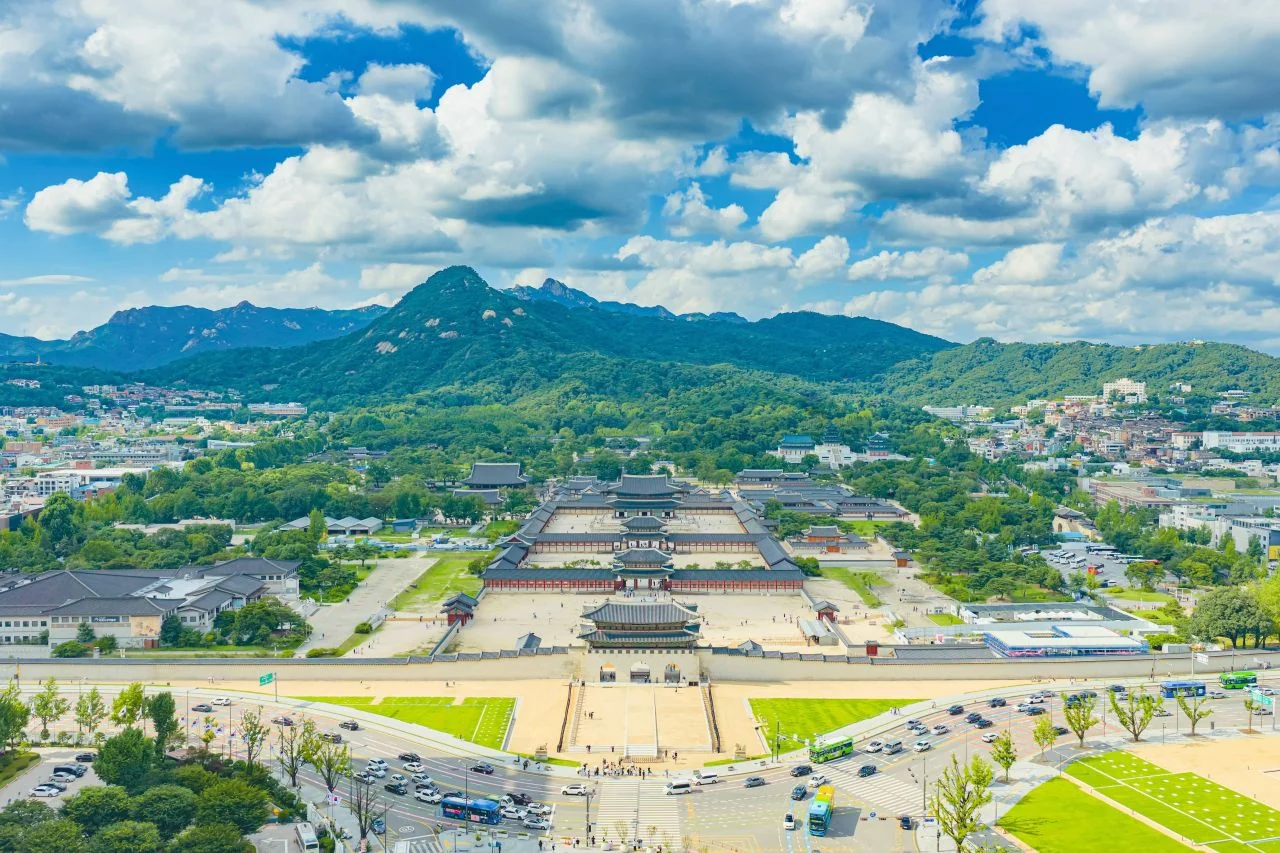
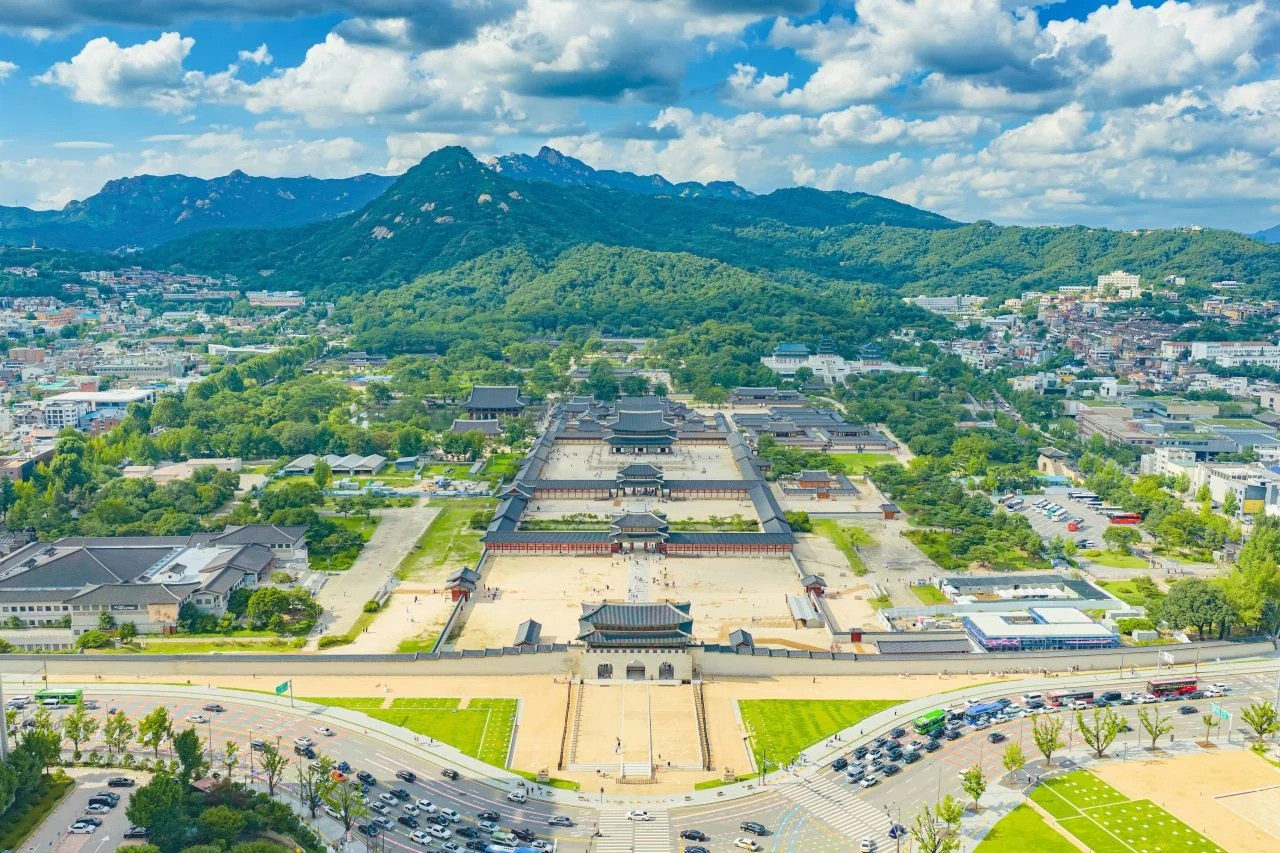
Passing beneath the arched portals of Gwanghwamun reveals a straight north-south central axis linking the stone Geumcheongyo Bridge, Heungnyemun Gate, and Geunjeongmun Gate. The sweeping eaves of tiled rooftops framed by modern glass skyscrapers create an unforgettable juxtaposition between ancient tradition and modern metropolitan life.
The Majestic Presence of Geunjeongjeon Hall Framed by Mount Bugaksan
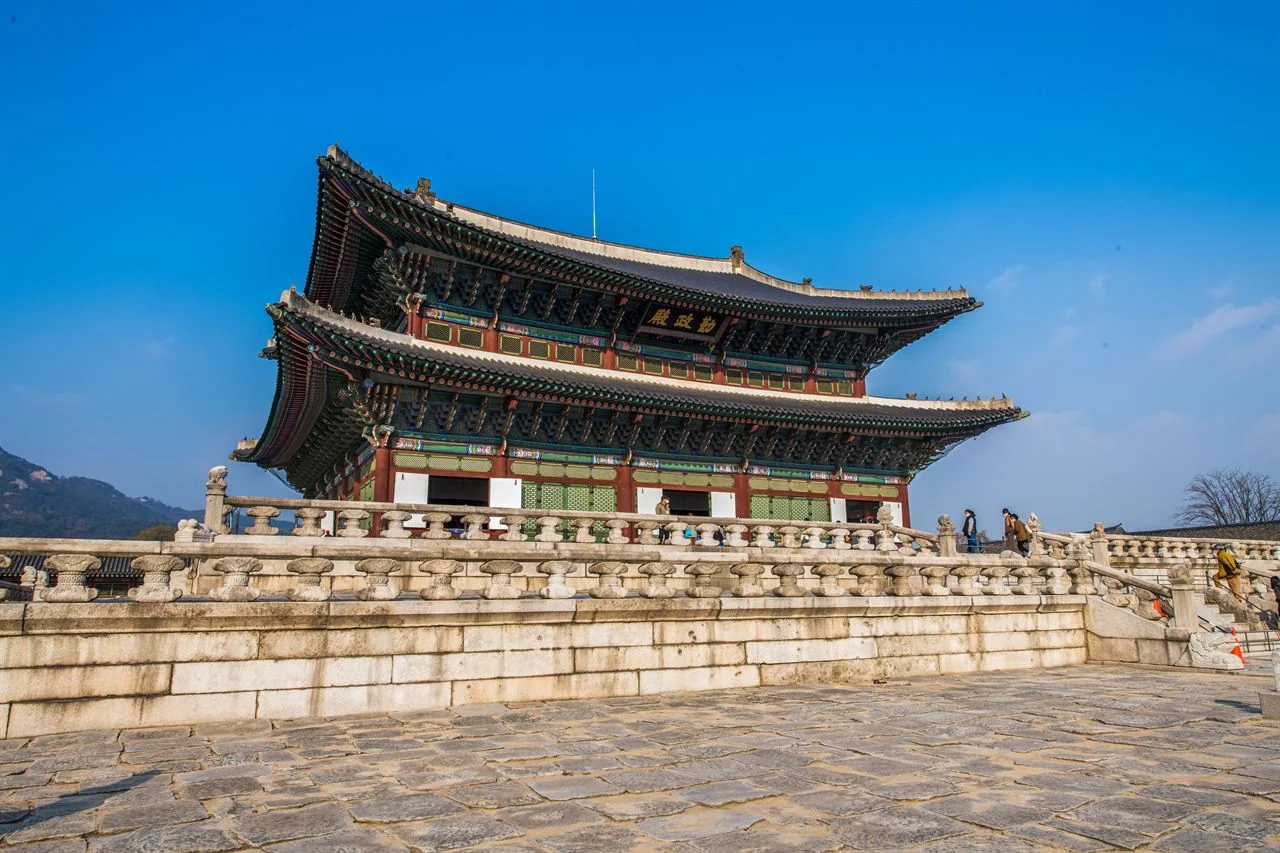
Crossing the threshold of Geunjeongmun Gate opens into a grand plaza where Geunjeongjeon rises upon a stately two-tiered stone terrace known as the Woldae. Its double-tiered hip-and-gable roof and richly ornamented timber brackets harmonize naturally with the dramatic ridgeline of Mount Bugaksan, illustrating the foundational Korean principle of building in harmony with nature.
The balustrades are adorned with finely carved stone guardians representing the directional spirits and zodiac animals. Peering inside between the massive red lacquered pillars reveals the elevated royal throne backed by the Sun, Moon, and Five Peaks folding screen (Irworobongdo), radiating sovereign majesty.
Centuries of History Across the Flagstones and Rank Markers of the Outer Court
The vast courtyard fronting Geunjeongjeon is paved with hand-chiseled granite flagstones known as bakseok. Deliberately left with a slightly uneven, textured finish to diffuse harsh sunlight and provide secure footing during formal court gatherings, these stones represent ingenious functional craftsmanship.
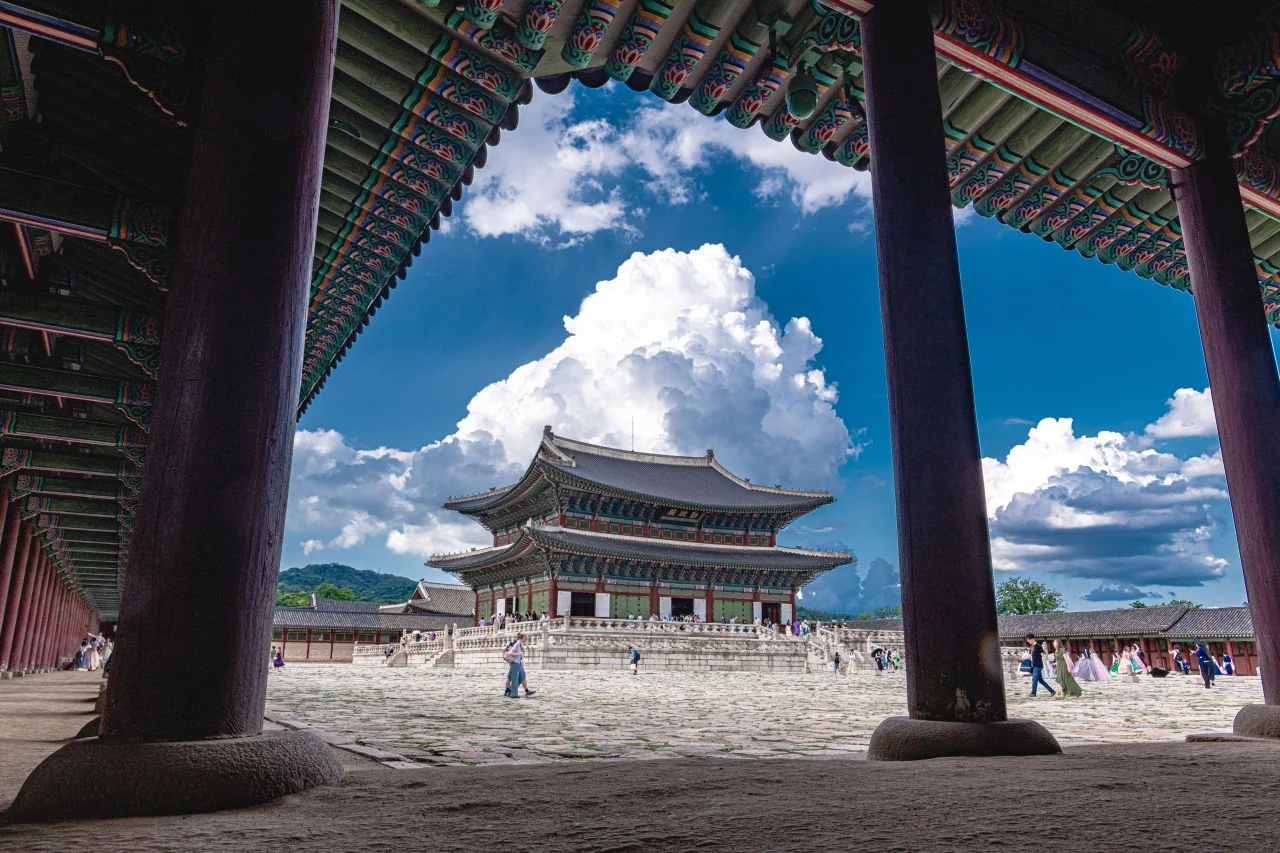
Flanking the three-tiered central royal stone walkway (Samdo) stand two parallel rows of stone markers designated from Rank 1 down to Rank 9, delineating where civil and military officials stood in solemn formation. Walking along these ancient flagstones evokes a vivid connection to the dynastic ceremonies that once echoed across this sacred space.
Graceful Pavilions Floating Above Calm Waters at Gyeonghoeru Hall
Exiting the western colonnade brings visitors before the peaceful artificial lotus pond encompassing Gyeonghoeru Hall. As one of Korea's largest single-story timber pavilions, this national treasure was reserved for royal feasts, celebrating state achievements and welcoming foreign dignitaries.
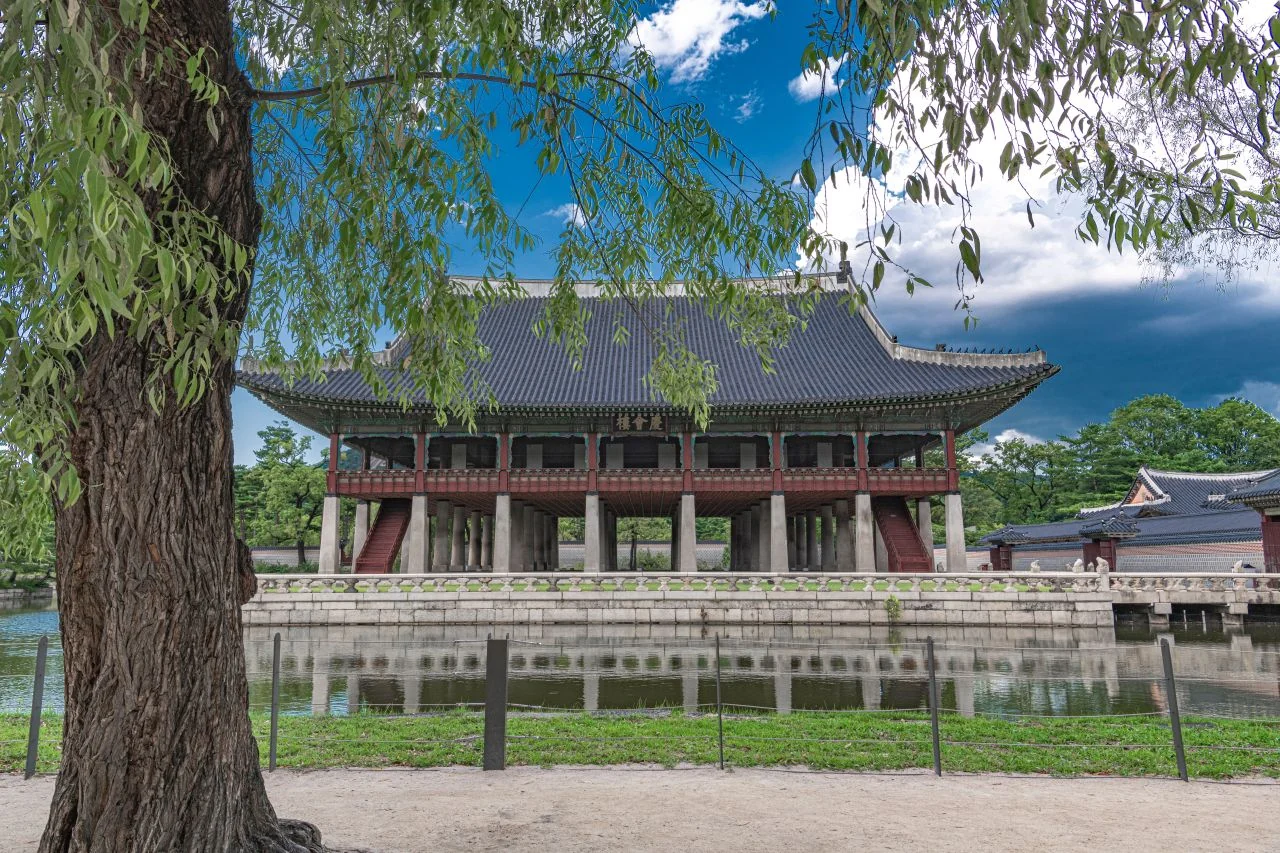
Supported by 48 colossal stone columns, the two-story pavilion seems to levitate weightlessly above the mirrored waters. Wandering the shaded perimeter path beneath weeping willows offers an idyllic visual sanctuary within the heart of the metropolis.
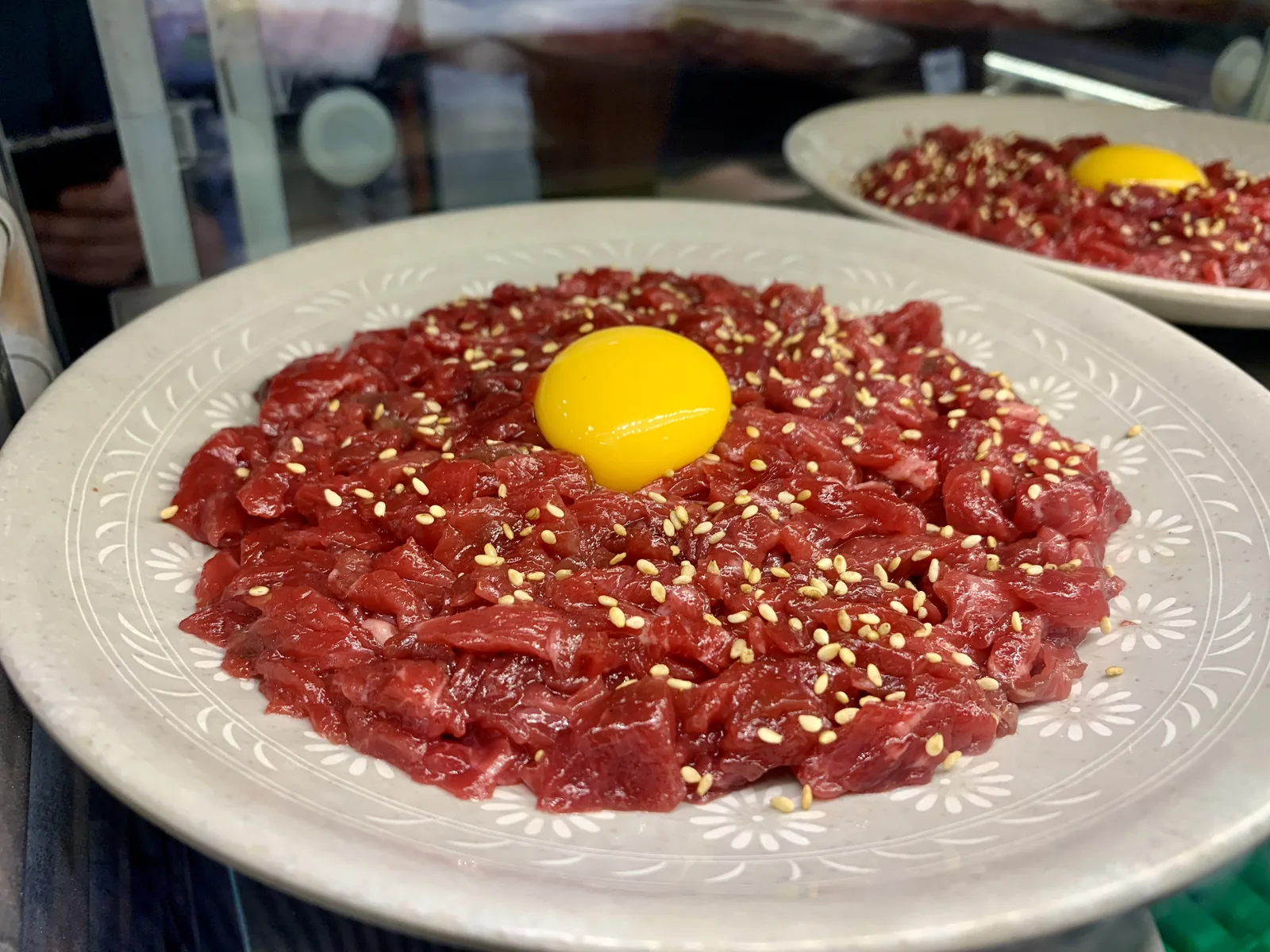
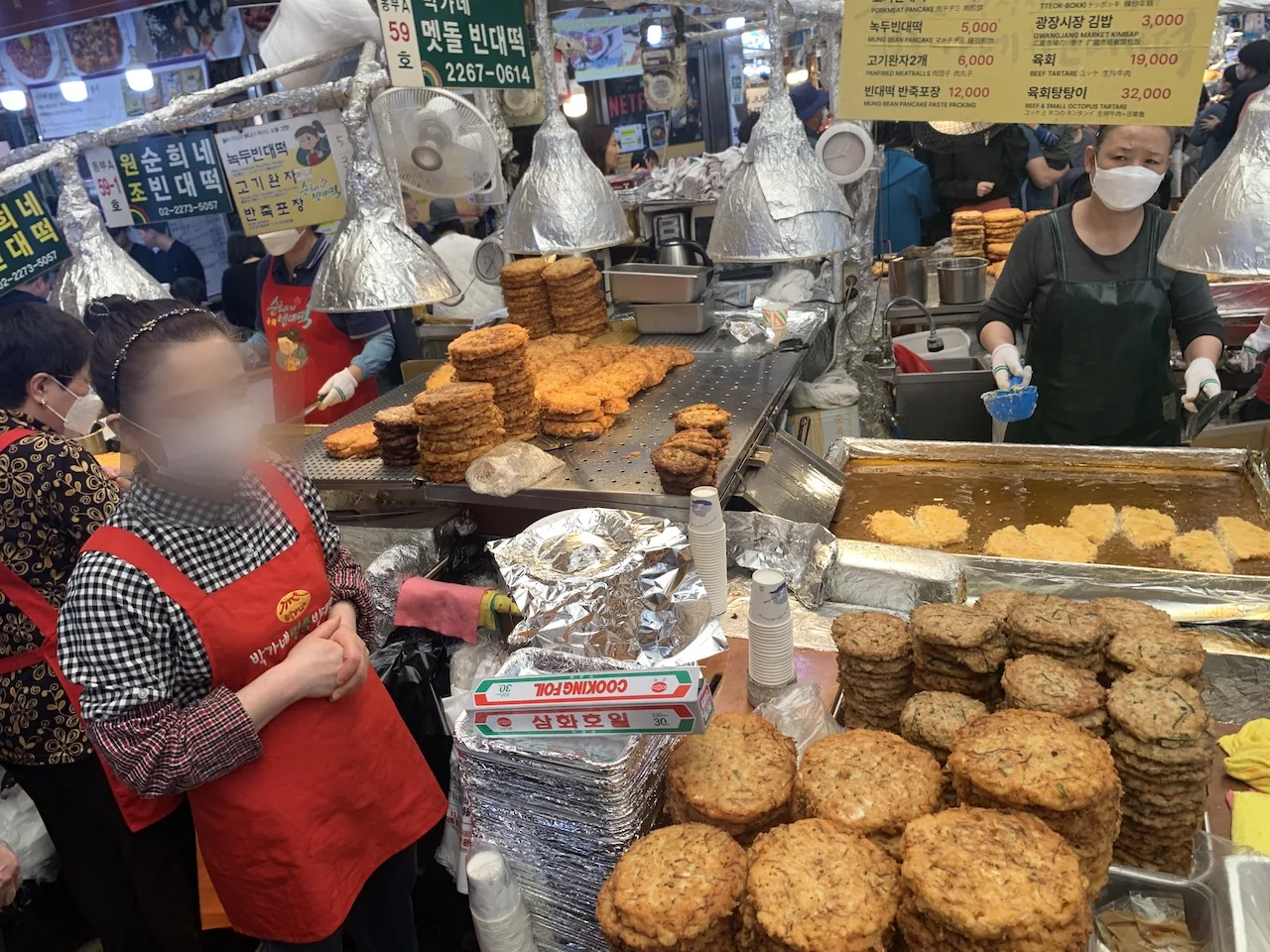
After immersing oneself in Gyeongbokgung's architectural splendor, continuing into the nearby UNESCO World Heritage trails of Changdeokgung Secret Garden or savoring authentic bites at Gwangjang Market Street Food provides a wonderfully fulfilling cultural day tour through Seoul.
Visitor Information, Guard Changing Ceremonies and Practical Travel Tips
Essential guidance covering admission fees, operating hours, free entry perks, and the royal guard changing schedule at Gyeongbokgung Palace.
| Category | Admission Fee | Details & Discounts |
|---|---|---|
| Adults (Ages 25–64) | 3,000 KRW | Standard general admission ticket |
| Youth & Children (Ages 24 & under) | Free | Valid photo ID or passport required |
| Seniors (Ages 65 & over) | Free | Valid government ID required |
| Hanbok Wearers | Free | Traditional or modernized Korean hanbok guidelines apply |
| Culture Day (Last Wednesday of month) | Free | Complimentary admission for all visitors |
- Address: 161 Sajik-ro, Jongno-gu, Seoul (Gyeongbokgung Palace)
- Hours: Nov–Feb 09:00–17:00 / Mar–May & Sep–Oct 09:00–18:00 / Jun–Aug 09:00–18:30 (Last entry 1 hour before closing; closed Tuesdays)
- Royal Guard Changing Ceremony: 10:00 & 14:00 (Twice daily at Gwanghwamun-Heungnyemun courtyard, approx. 20 min; closed Tuesdays)
- Gwanghwamun Gate Guard Duty: 11:00 & 13:00 (Twice daily, closed Tuesdays)
- Suggested Route: Gwanghwamun Woldae ➔ Heungnyemun ➔ Geunjeongjeon ➔ Sajeongjeon ➔ Gyeonghoeru ➔ Hyangwonjeong (approx. 2 hours walk)
- Parking: Gyeongbokgung east public underground lot available (Base 2 hours 3,000 KRW for standard vehicles)