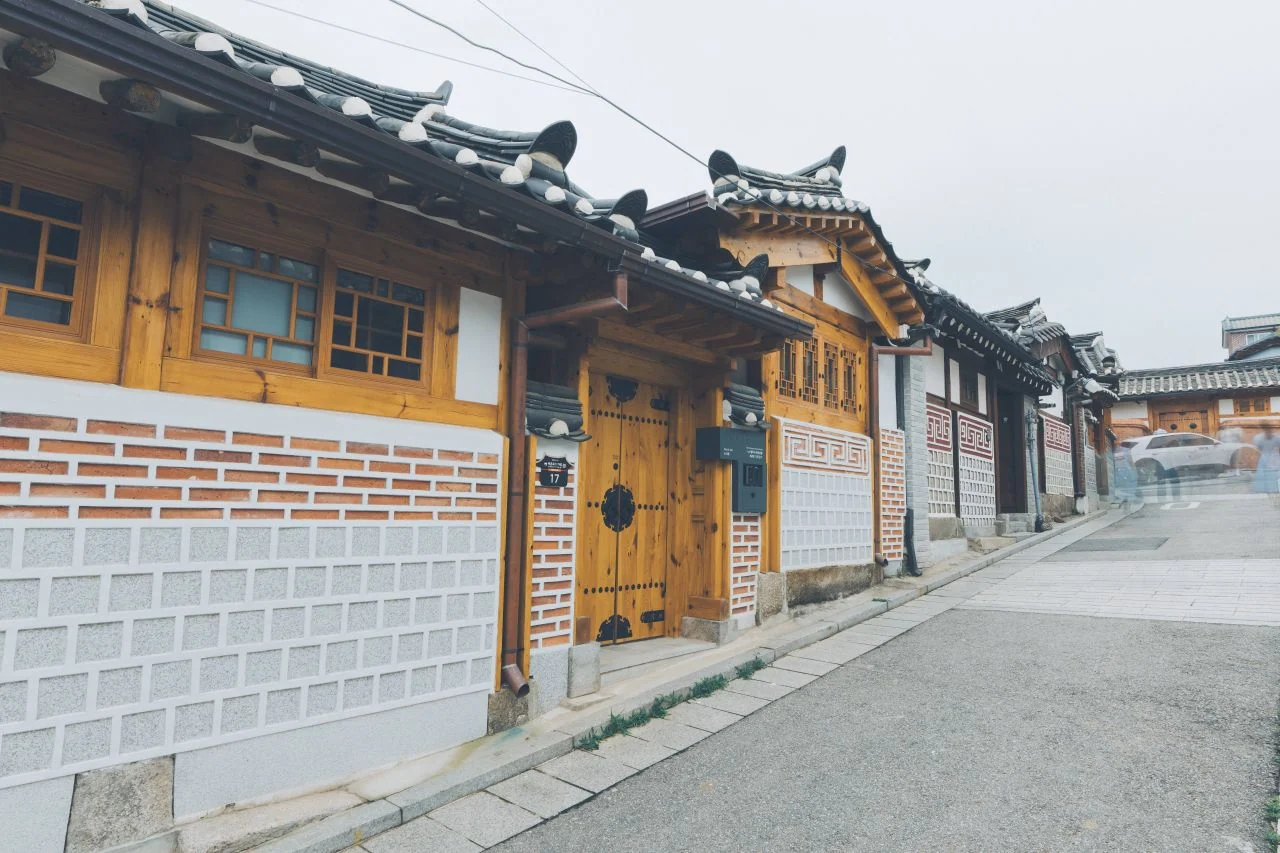
Visiting Jeonju during the crisp winter months reveals a wonderfully tranquil side of the famous Hanok Village. Away from peak tourist crowds, the narrow alleys lined with traditional earthen walls feel intimate and peaceful. Strolling along the evergreen bamboo paths of Gyeonggijeon Shrine, climbing up to Omokdae pavilion to overlook hundreds of gracefully curved tiled rooftops, and warming up with a piping-hot stone pot of bean sprout soup accompanied by spiced herbal moju creates an unforgettable winter journey.
Quiet Winter Paths in Hanok Village
Jeonju Hanok Village retains unique charm throughout every season, but winter offers unmatched serenity. When the bustling crowds subside, cold air sweeps between earthen mud walls and wooden lattice doors, bringing over seven centuries of preserved history sharply into focus.
Walking slowly along stone-walled lanes under crisp winter sunshine, the only sounds are the wind rustling through bare branches and quiet footsteps. It provides a peaceful sanctuary to escape urban rush and reflect in calm contemplation.
Evergreen Bamboo Grove in Gyeonggijeon
Situated at the historical core of Hanok Village, Gyeonggijeon Shrine was constructed in 1410 to enshrine the portrait of King Taejo Yi Seong-gye, founder of the Joseon Dynasty. Even in deep winter when surrounding deciduous trees stand bare, the dense bamboo forest lining the western stone wall remains vibrant emerald green.
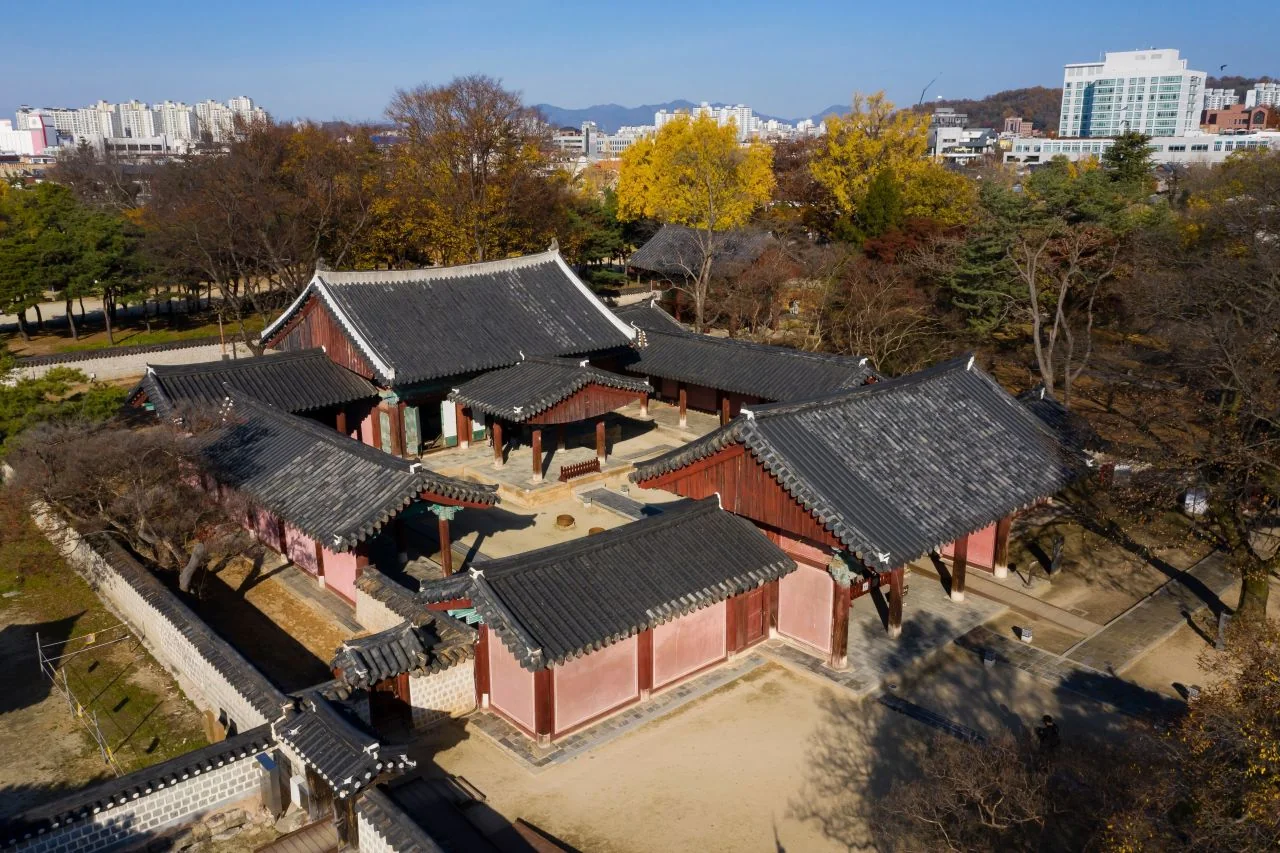
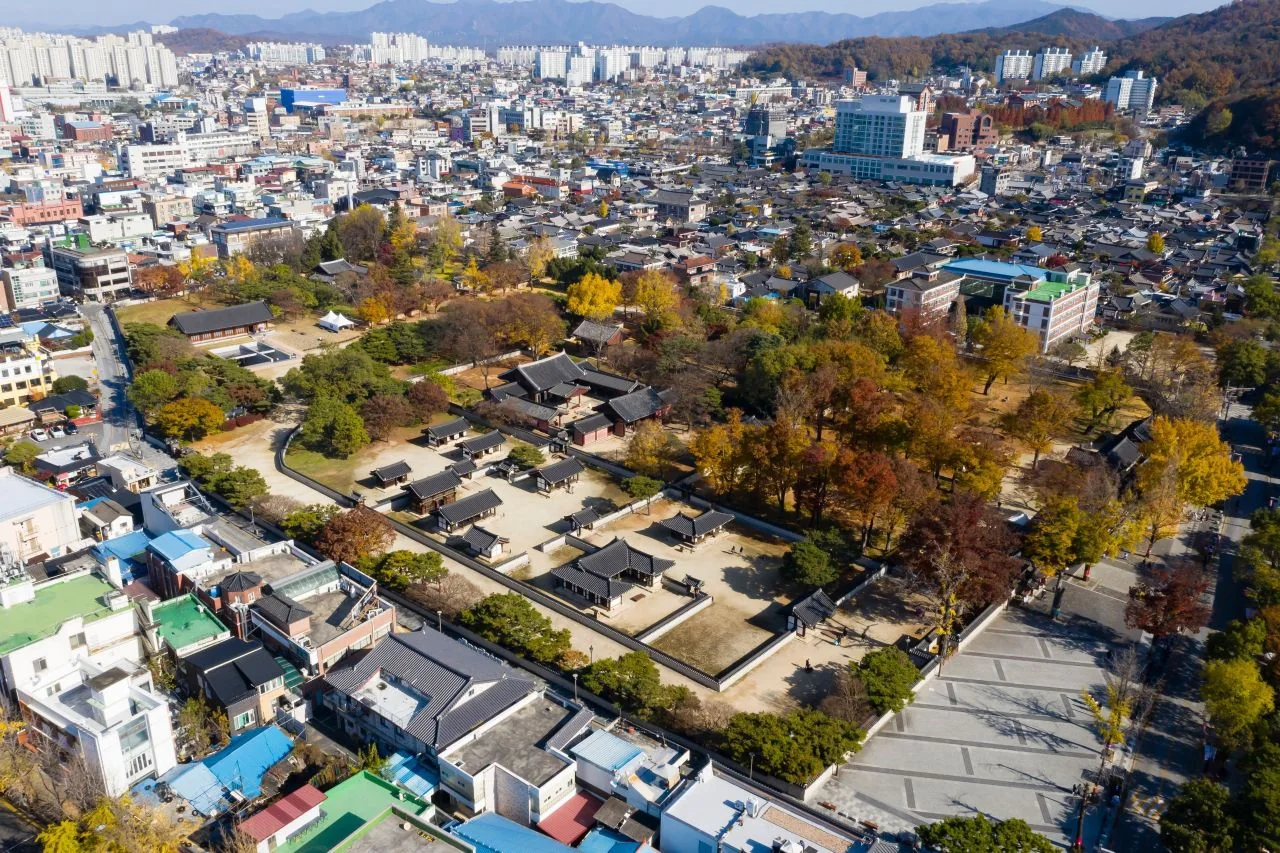
The gentle rustle of bamboo leaves dancing in the winter breeze creates a soothing acoustic resonance. Walking through this compact emerald forest provides memorable photo opportunities and an immediate feeling of seclusion from the outside world.
Curved Tiled Roof Panorama from Omokdae
Following wooden stairs upward toward the eastern hill for about ten minutes leads to Omokdae. In 1380, General Yi Seong-gye hosted a victory celebration here after defeating Japanese invaders at Hwangsan Mountain before returning to Gaegyeong. While the grand pavilion atop the hill is historically significant, the true highlight is the panoramic view from the mid-slope observatory deck.
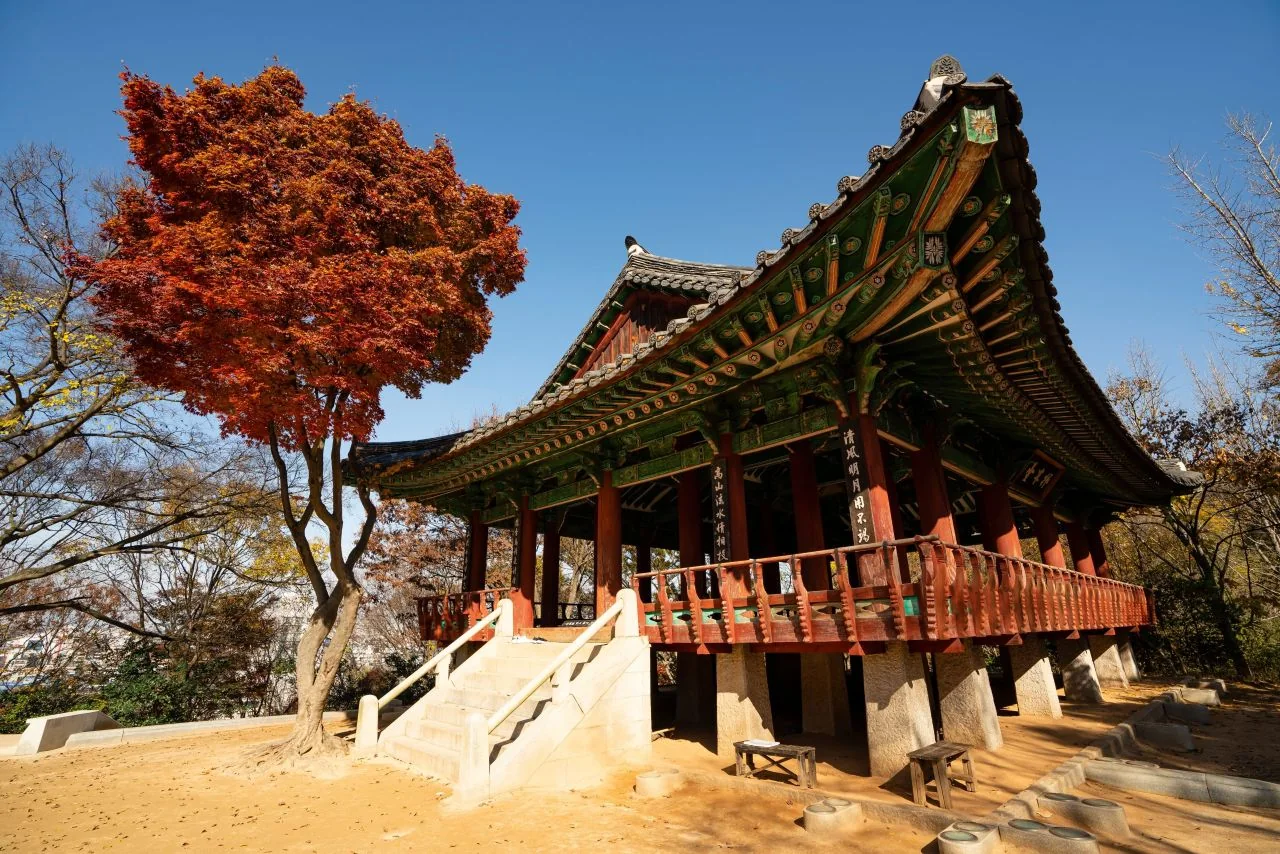
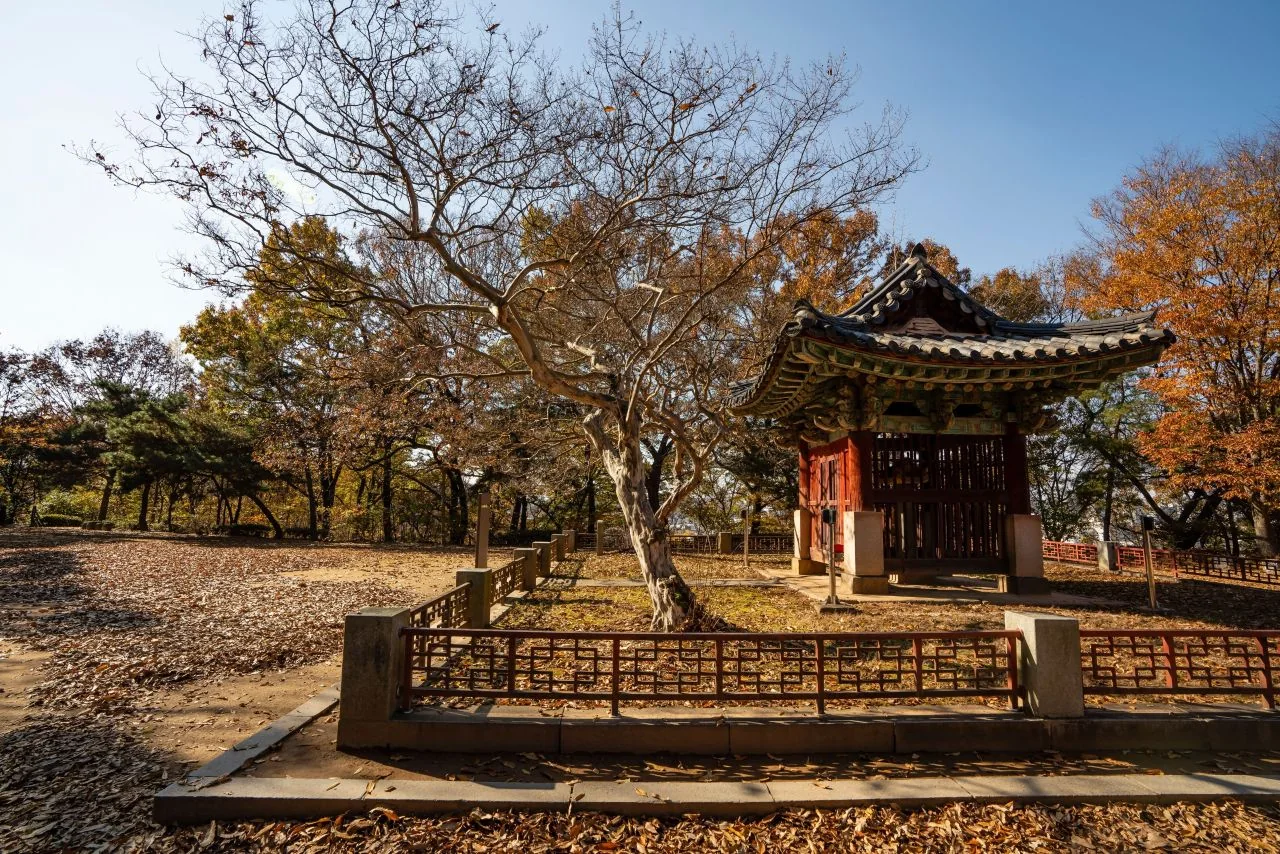
Standing by the observatory railing, hundreds of black-tiled Hanok roofs unfurl across the basin like undulating ocean waves. The elegant sweep of traditional Korean eaves contrasted against clear winter skies forms one of the most iconic vistas in Korea.
Bubbling Hot Kongnamul-gukbap in Earthen Pots
After wandering through chilly alleys, nothing warms body and soul faster than a bubbling bowl of Jeonju-style bean sprout soup (Kongnamul-gukbap). Simmered with anchovies, kelp, and dried fish, the clear yet deeply flavorful broth is packed with crunchy local sprouts that instantly chase away the cold.
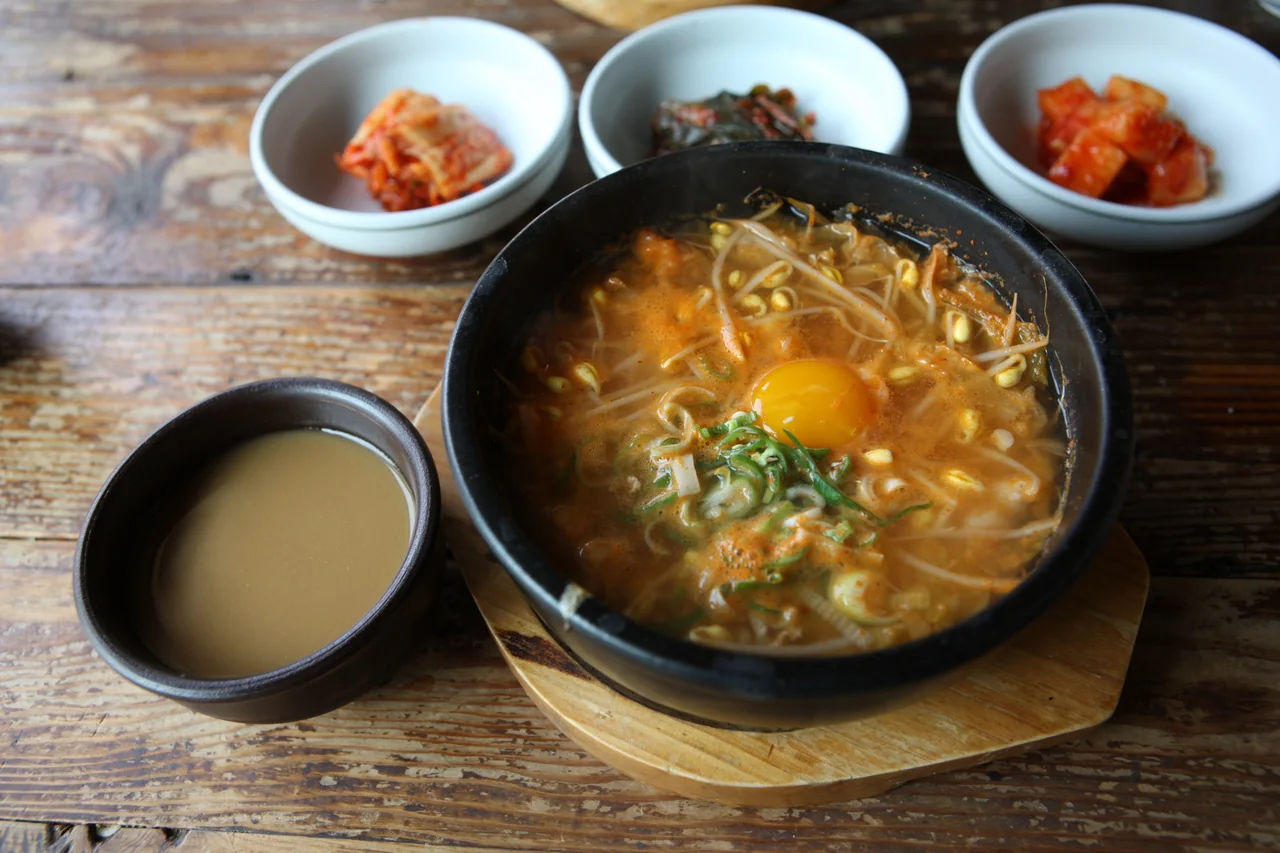
Jeonju bean sprout soup comes in two major styles: the intensely boiling earthenware version and the Nambu Market style served warm with a separate soft-poached egg (suran). When enjoying the Nambu Market style, spoon three to four ladles of hot broth into the stainless cup holding the poached egg, sprinkle shredded seasoned seaweed, and stir lightly. Adding tender boiled squid cubes into the soup adds delightful chewiness.
Warm Spiced Moju with Cinnamon Aroma
The quintessential accompaniment to bean sprout soup is a warm cup of Moju. Prepared by gently simmering unrefined rice wine (makgeolli) with ginger, jujubes, cinnamon, licorice, and other herbal ingredients until almost all alcohol evaporates, this traditional restorative beverage has an alcohol content below 1%.
Cupping the steaming glass in both hands, the gentle aroma of cinnamon and sweet dates warms the senses, easing winter chill with each soothing sip.
Menu Prices and Gyeonggijeon Admission
| Item | Details | Price (KRW) |
|---|---|---|
| Jeonju Kongnamul-gukbap | Nambu Market style (with poached egg) | 8,500 - 9,000 KRW |
| Boiling pot style | 8,000 - 8,500 KRW | |
| Boiled Squid Topping | Extra tender diced squid portion | 2,500 - 3,000 KRW |
| Warm Moju | Single glass (warm) | 2,000 - 2,500 KRW |
| One bottle / pitcher | 6,000 - 8,000 KRW | |
| Gyeonggijeon Admission | Adult (Ages 19-64) | 3,000 KRW |
| Youth (Ages 13-18) | 2,000 KRW | |
| Child (Ages 7-12) | 1,000 KRW |
Visitor Information and Access
- Location: 99 Girin-daero, Wansan-gu, Jeonju-si, Jeonbuk State (Gyeonggijeon Shrine)
- Gyeonggijeon Hours: Summer (Mar-Oct) 09:00-19:00, Winter (Nov-Feb) 09:00-18:00 (Last entry 1 hour before closing)
- Omokdae Access: Open 24 hours daily with evening illumination
- Parking: Jeonju Hanok Village Public Parking Lots 1 and 2
- Public Transit: From KTX Jeonju Station, take Bus 119, 535, or 543 to Jeondong Cathedral / Hanok Village stop (approx. 25 minutes)
- Recommended Course: Gyeonggijeon Shrine & Bamboo Grove ➔ Jeondong Cathedral ➔ Hanok Alleys ➔ Omokdae Observatory ➔ Nambu Market Gukbap Alley