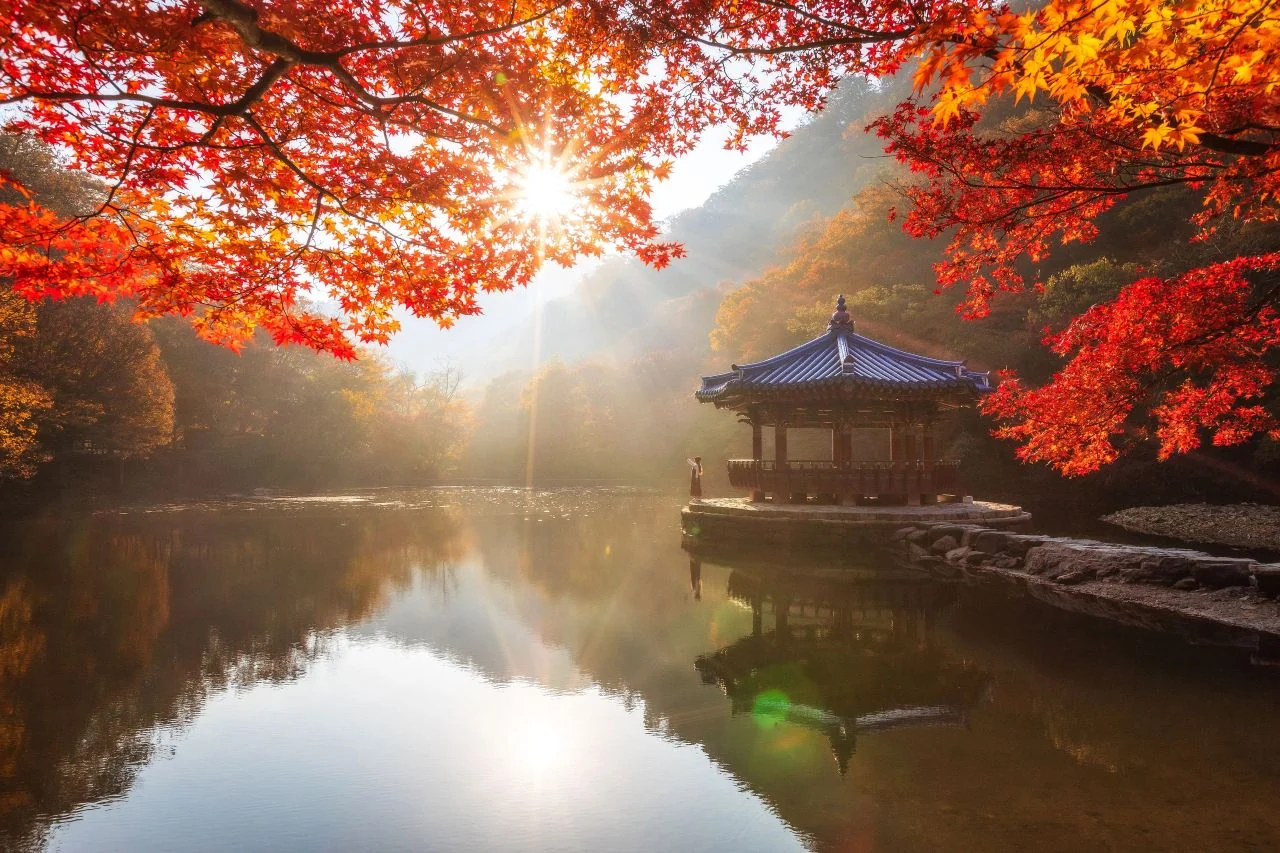
When autumn foliage subsides, Jeongeup reveals the true contemplative soul of its mountains and historic temples. Strolling around Uhwajeong Pavilion resting peacefully on a crystal-clear mountain pond, visiting the ancient temple Naejangsa cradled by dramatic rocky ridges, and stepping into the famed Ssanghwacha Street for a sizzling bowl of restorative herbal tea served in heavy stone cups offers an extraordinary winter retreat.
Quiet Winter Waters around Uhwajeong Pavilion
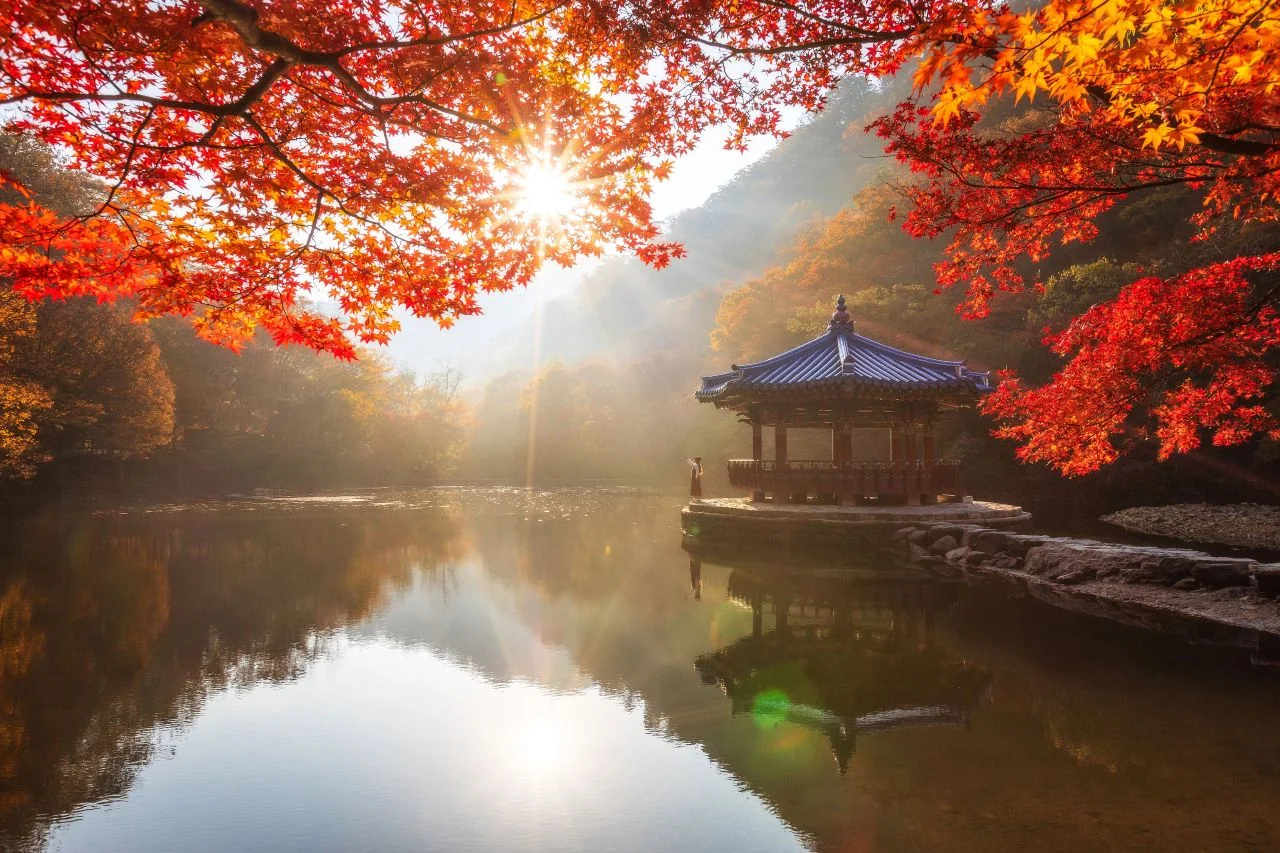
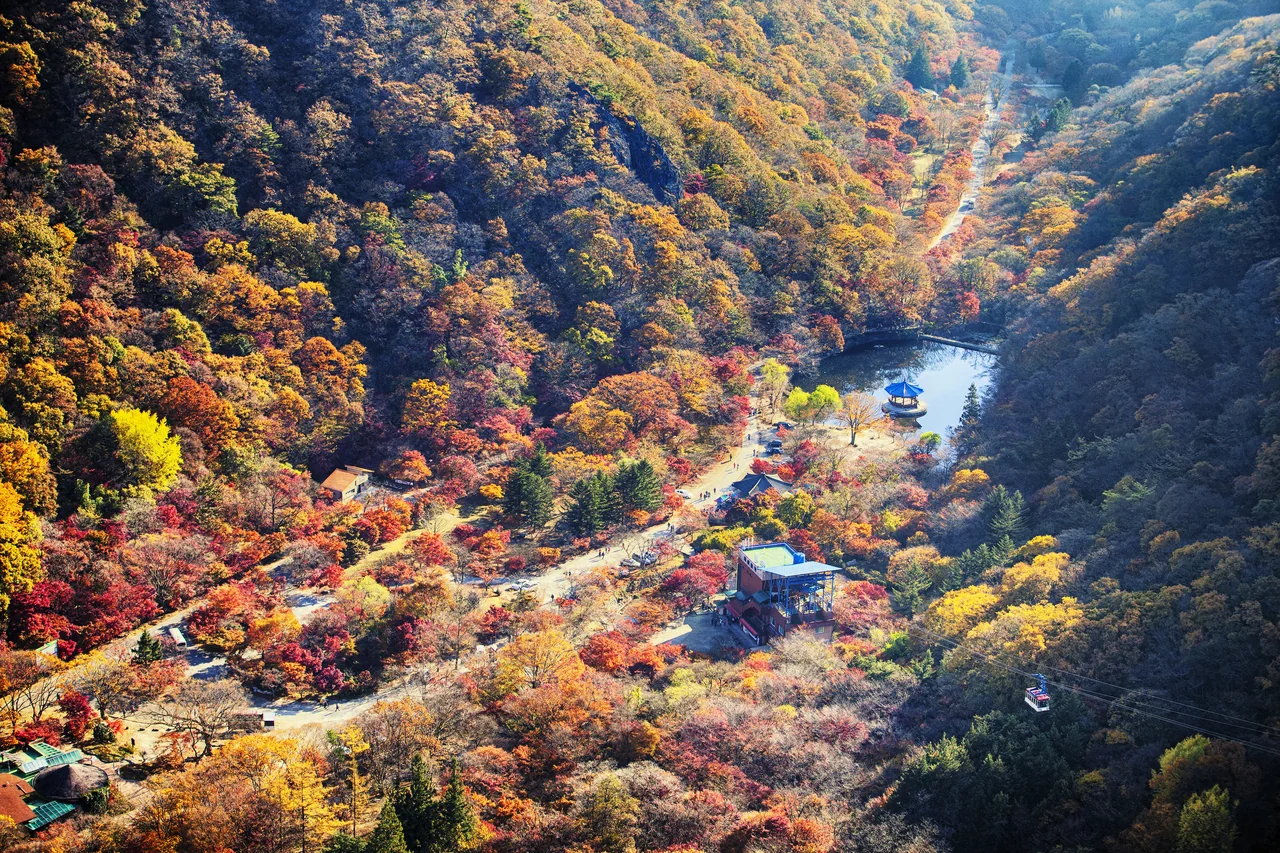
Passing the entrance trail of Naejangsan National Park toward the main gate, visitors encounter Uhwajeong Pavilion floating gracefully on a pristine mountain lake. According to local lore, the pavilion was named after wings sprouting from the structure to ascend into heaven, framed by sharp stone cliffs that symbolize Jeongeup's natural majesty.
Crossing the stepping stones across the calm water on a crisp winter morning, the reflections of dramatic ridges and traditional upturned eaves mirrored on the lake surface create an exquisite landscape. In this peaceful offseason, only the whisper of winter wind and crystal mountain streams break the silence.
Ancient Solitude at Naejangsa Temple
Walking about fifteen minutes along a gentle forest path from Uhwajeong leads through the Iljumun gate to Naejangsa Temple, founded in 636 CE during the Baekje Dynasty. Snuggled securely in a natural basin embraced by the towering granite peaks of Seoraebong and Yeonjibong, the grounds feel sheltered and surprisingly warm even in midwinter.
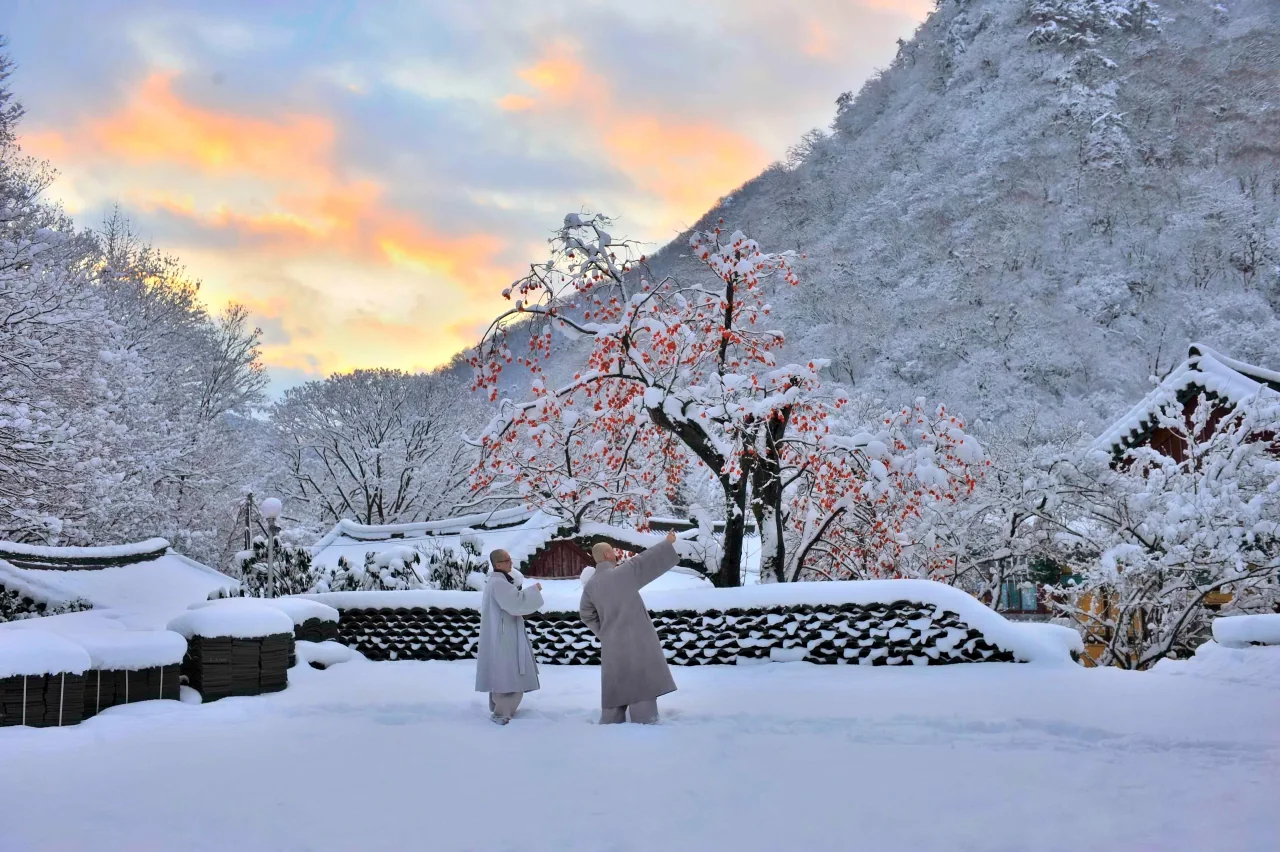
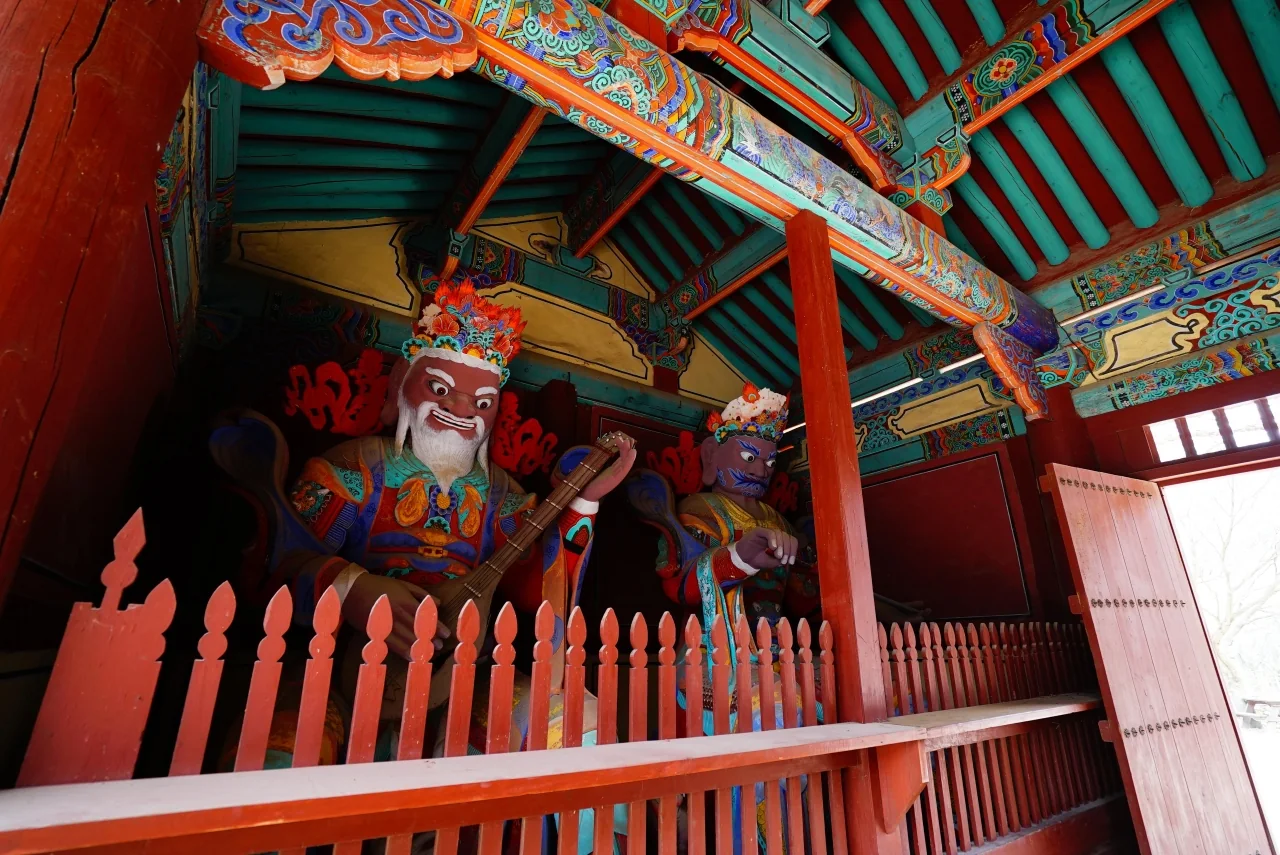
Standing by the temple bell pavilion listening to the soft chime of wind bells while admiring the understated wooden craftsmanship, visitors feel the profound stillness of an ancient mountain sanctuary stripped of seasonal distractions.
UNESCO World Heritage Museongseowon Academy
On the route back toward downtown Jeongeup in Chilbo-myeon stands Museongseowon, one of nine historic Confucian academies inscribed on the UNESCO World Heritage list. Established to honor Choe Chi-won, an eminent scholar-official of the late Silla Kingdom who served as local magistrate, the academy preserves noble scholarly traditions.
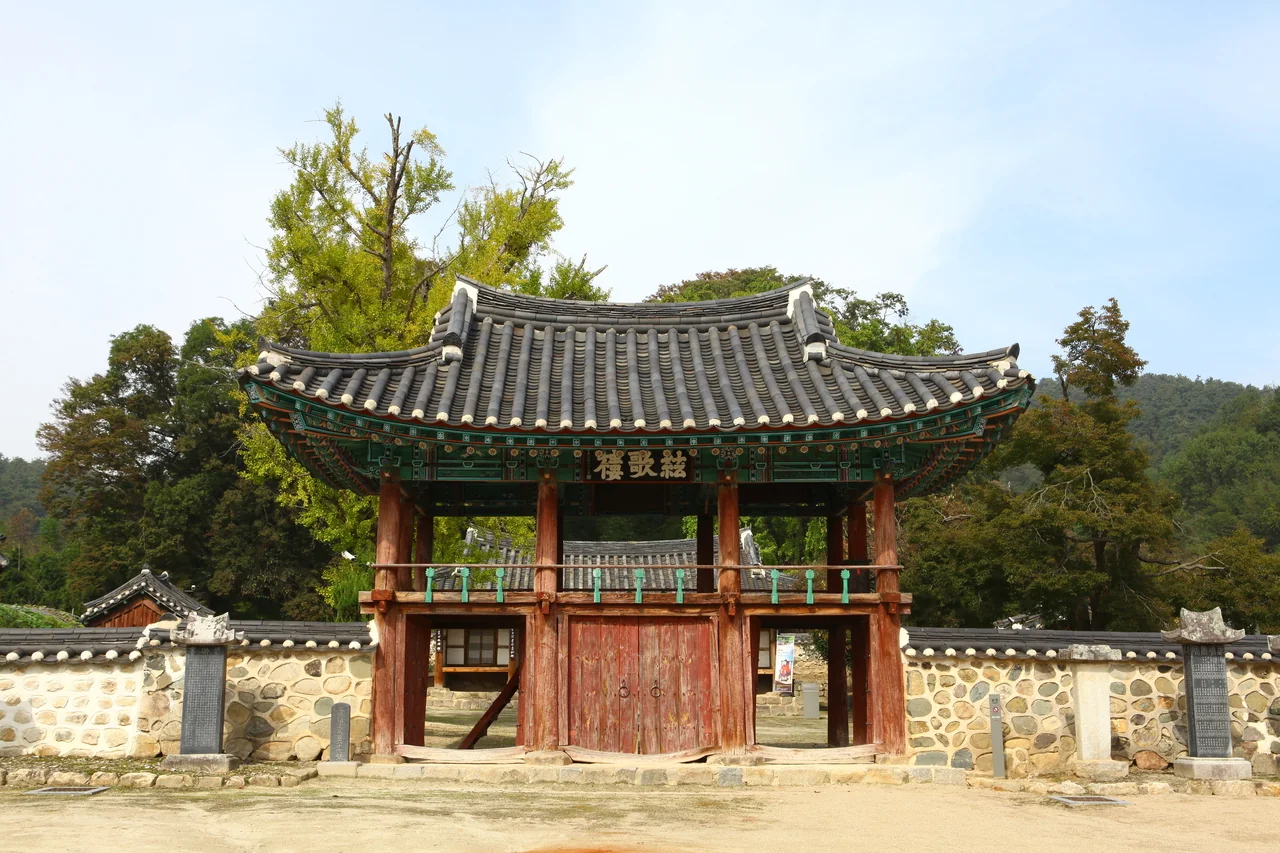
Entering through the two-story Hyeongaru Pavilion, meaning 'a pavilion for singing while playing the zither', the harmonious relationship between the academy buildings and surrounding village fields offers an inspiring glimpse into classical Confucian governance through music and moral education.
Legendary Ssanghwacha Street and Sizzling Stone Cups
To thaw chilly extremities after exploring historic sites, head straight to Ssanghwacha Street near the Jeongeup Police Station. Historical records dating back to the Joseon Dynasty document Jeongeup as a renowned center for medicinal herbs, a heritage that lives on through over thirty traditional teahouses clustered along this aromatic avenue.
Stepping inside, rich aromas of simmering herbs welcome guests. What makes Jeongeup unique is that the tea is served in heavy natural stone cups called 'gopdoljan'. Heated directly over flames, these stone vessels keep the medicinal broth sizzling and piping hot down to the very last spoonful.
Deep Herbal Ssanghwa Tea with Chestnuts and Gingko
Unlike commercial powdered teas, Jeongeup Ssanghwacha is an authentic restorative elixir slow-brewed for over ten hours with more than twenty domestic medicinal herbs including angelica, peony, cnidium, rehmannia, cinnamon, and licorice. Without artificial sweeteners, natural sweetness derived from jujubes and licorice balances the robust herbal bitterness.
Stirring the boiling stone mug reveals whole peeled chestnuts, golden gingko nuts, jujube slices, and sunflower seeds packed thickly at the bottom. Served alongside freshly toasted chewy rice cakes drizzled with grain syrup (jocheong), this nourishing ritual warms body and soul throughout the winter cold.
Menu Prices and Admission Guide
| Category | Description | Price (KRW) |
|---|---|---|
| Traditional Ssanghwacha | Hot stone mug (chestnuts, gingko, jujube) | 9,000 - 10,000 KRW |
| Toasted Rice Cake & Syrup | Complimentary with tea (additional order) | Free (extra 3,000 KRW) |
| Concentrated Jujube Tea | Rich slow-boiled red date tea | 9,000 - 10,000 KRW |
| Naejangsan & Naejangsa | National Park & cultural admission | Free |
| Naejangsan Shuttle Bus | Park bridge to temple entrance (one-way) | 1,000 KRW |
| Museongseowon Academy | UNESCO World Heritage site admission | Free |
Visitor Information and Access
- Ssanghwacha Street: Jungang 1-gil & Suseongmokwa-gil area, Jeongeup-si, Jeonbuk State
- Teahouse Hours: 10:00 - 22:00 daily (varies by teahouse, open year-round)
- Naejangsan & Uhwajeong: 1253 Naejangsan-ro, Jeongeup-si, Jeonbuk State
- Museongseowon: 44-12 Wonchon 1-gil, Chilbo-myeon, Jeongeup-si
- Parking: Public parking near Ssanghwacha Street / Naejangsan National Park parking lots
- Public Transit: From KTX/SRT Jeongeup Station, take Bus 171 to Naejangsan Visitor Center (approx. 35 mins); Ssanghwacha Street is a 15-minute walk or 3-minute taxi ride from station
- Recommended Course: Uhwajeong Lake Stepping Stones ➔ Naejangsa Temple Walk ➔ Museongseowon Academy ➔ Ssanghwacha Street Sizzling Stone Mug Tea